Astrology
Latest Update: 2026-05-08
A Brief History of Astrology
You can watch the video below and follow along with the transcript below that.
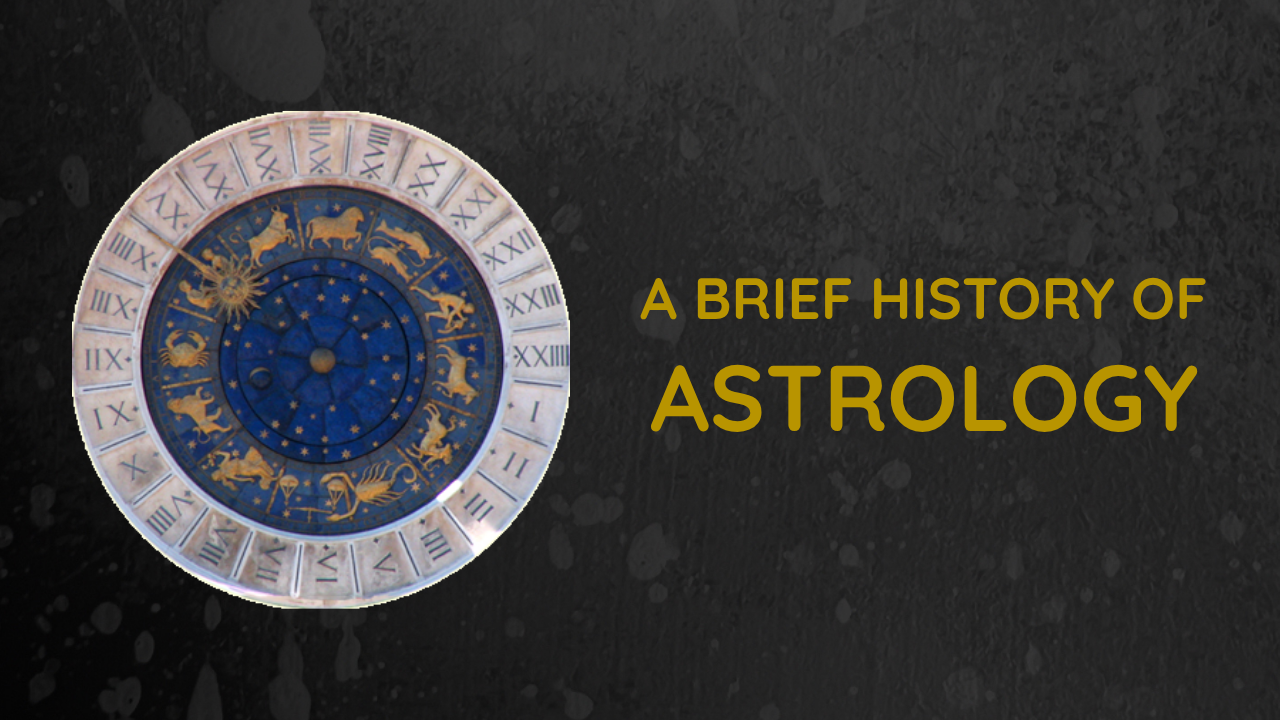
Before I go through a brief history of astrology, I should point out that some of the dates and our understanding of our own history in this section are general estimates and, perhaps, speculative, as new findings or research might turn our understanding and perspective upside down and change our worldview. However, as of right now, we can say that astrology––as in the tracking of planetary movements and their correspondences––has been around for centuries. It goes back to ancient times when the light shows humans watched were the celestial bodies slowly moving across the sky, rather than the handheld screens that we have in today’s day and age.
While astrology is a tool that’s been used, and still is, all over the world and throughout history, I’ll be focusing on the Western tradition here, which has its roots in Babylonian, Egyptian, Greco-Roman, and Arabic traditions. With that said, however, I want to mention that, for example, Chinese and Indian (or Vedic) astrology have their own systems based on their own rich cultures and history.
Chinese Astrology
According to Roy Gillett, in his book The Secret Language of Astrology, some of the earliest written references to astrology in China were from the early Shang Dynasty (c. 1500-1050 BCE), and they were found on “divination objects called oracle bones”. Then he goes on to write:
“Since that time, the Chinese have developed many methods of understanding humanity's relationship with the world. Most people know about the cycle of 12 animals that rule each year. Behind this lies a complex system of astrological calculations and interpretation. The Chinese astrological archetypes are very different from those of Western astrology, but are still calculated from time, date, and place of birth” (Gillett, 2012, p. 9).
This is, of course, only a very brief summary of Chinese astrology, which is also based on elements that are different from the Western world’s primary four (Fire, Earth, Air, Water), as the Chinese elements of their Zodiac are Wood, Fire, Earth, Metal, and Water. These are also described more as energies rather than types of material (as in the Western elements).
Vedic Astrology
Indian or Vedic astrology also has a long history, according to Gillett, that might have been passed down through centuries, perhaps even millennia. An interesting thing here is that there might be a link between Vedic astrology and that of Babylonian and Greek astrology that we use in the West. As Gillett writes:
“Only in recent decades has the translation of various ancient Greek and Latin texts revealed how similar these Indian traditions are to techniques used by Greek, medieval and Renaissance astrologers in the West. It appears that the influence of Babylonian and Greek astrology reached India at the same time as it was flourishing in the Mediterranean” (Gillett, 2012, p. 13).
Perhaps this was due to the ancient trade routes between India and the Mediterranean area, where these traditions could mix and combine?
Gillett then continues by writing that in India, “astrology acquired greater devotional respect than in the West, becoming the positive force in Indian society that it continues to be to this day” (Gillett, 2012, p. 13).
In contrast to the Indian tradition, I would say that a big part of the reason astrology has lost this status in the Western world is because of the way the Western psyche has evolved (which isn’t necessarily a good thing, by the way) and because of how we have come to relate to nature and its power and magic. I won’t dive deeper into that here because that could be a whole hour-long discussion, but I might expand on it in the future.
Western Astrology
Now, let’s look at the history of Western astrology, which dates back to our Homo sapiens ancestors.
The Prehistoric Crumbs
Gillett begins his brief timeline of astrology by noting that it has probably been part of our lives since we began to understand that everything around us was alive and that the Sun and Moon affected us and our surroundings. He writes:
“As humanity began to develop an understanding of its environment, people started to observe, assess and measure those things that seemed responsible for their sustenance, their comforts and the threats to their survival. The rising Sun brought warmth; the shape of the Moon affected the tides and women’s menstrual cycles. The position of the Sun and the patterns of the stars were observed to change with the seasons, and so marked the times of plenty and hardship” (Gillett, 2012, p. 8).
He then goes through a couple of archaeological findings that may indicate that the human species has been tracking the planets for a very long time. He, for example, mentions that prehistoric humans have been found buried with animal bones with 28 notches carved into them, which might indicate the Moon’s cycle, as it takes the Moon about 28 days to circle the Earth and thereby go from a New Moon to a Full Moon and back to a New Moon.
Another thing he mentions is the approximately 25,000-year-old carving called The Venus of Laussel, which depicts a woman holding a horn of sorts that looks like a crescent moon with 13 notches, which might indicate the number of months in the lunar year.


Fast forward to around 4000 BC, and we’re in a time where, as Julia and Derek Parker write in Parkers’ Astrology, astrology and astronomy “went hand in hand for many millennia” (Parker, 2020, p. 14). They continue to write that around this time, Chaldean priests in Babylon, a city and empire in the Mesopotamian region, “used watchtowers to make maps of the skies” and that there are clay tablets dating from 3800 BCE telling of the movements of the Sun and Moon, recorded with “extraordinary accuracy” (Parker, 2020, p. 14).
Gillett also mentions other things like the many stone structures and circles that have been found throughout Europe, and in the Middle East, a famous one being Stonehenge in southern England (the building of it began around 3100 BC, it was erected around 2500 BC, and remodeled until about 1600 BC). He writes how they were laid out to “mark the solstices and the equinoxes, while other stone circles seem to have aided the calculation of the lunar calendar and eclipses.” (Gillett, 2012, p. 8).
It wasn’t simple or light work to make these megalithic stone circles, and Gillett comments on that, writing that the effort it must have taken to build these structures “indicates that prehistoric peoples believed their lives to be a reflection of the cycles of the heavens, or at least to be closely linked to them” (Gillett, 2012, p. 8). The drawback, however, is that the knowledge of, for example, Stonehenge was most likely passed down orally through generations, and since it wasn’t written down, “we have no written records to indicate what the builders of Stonehenge and the other stone monuments understood. There is greater evidence from later times.” (Gillett, 2012, p. 8-9).
Western Astrology’s Roots
As I’ve mentioned before, the astrology that’s practiced in the West today has its roots in ancient Mesopotamian, Egyptian, and Greco-Roman traditions. Babylon, as I mentioned before, is noted as especially important in the books I’ve read. Roy Gillett writes, among other things, that:
“Some claim that Babylonian astrology dates from the fifth millennium BCE. The earliest clay tablets found show that by the third millennium BCE, the Babylonians understood the movements of the Sun, the Moon and the five planets and interpreted them to guide their decision-making. They devised sacred calendars revealing that Venus was Ishtar, the goddess associated with love, Mars was Nergal, the god of the underworld, and Mercury was Mabu, the scribe of the gods.” (Gillett, 2012, p. 10).
Gillett then writes that the knowledge of and within astrology “was based on interactive empirical observation of the movement of the heavens relative to events on Earth.” (Gillett, 2012, p. 10-11). In other words, astrology is a system or structure or art form (or whatever you want to call it) that has been observed and developed over a very long time. And another key thing about astrology is that it was developed through the interaction with other cultures, perspectives, and ideas. Gillett writes, for example, that:
“The Persian occupation of Babylon in 539 BCE […] exposed not so much the shortcomings of astrology itself, as the shortcomings of the Babylonian astrologers of the time. Their encounter with the Zoroastrian Persian state was to lead to major advances in astrology. Clay tablets dated to 419 BCE reveal a systematic understanding of the 12-sign zodiac and give interpretations of the planets moving through signs — in other words, the technical foundation of the Western astrological language that we know today.” (Gillett, 2012, p. 11).
Carole Taylor, in her book Astrology: Using the wisdom of the stars in your everyday life, also writes, for example, that:
“Astrology spread from Babylon to Greece and Egypt. Alexandria became the intellectual center of the ancient world and it is here that the concept of the horoscope was born. It brought together the Babylonian Zodiac with Greek notions of the four elements and the celestial sphere, alongside Egyptian symbolism. It also infused astrology with Neoplatonist philosophy, with its belief in a magical correspondence between sky and Earth.” (Taylor, 2018, p. 14-15).
In addition, Egyptian astrologers had at the time divided the sky into decans, 36 subdivisions of 10° each. Since each Zodiac Sign stretches across 30°, each Sign, therefore, includes 3 decans each.
So, while we credit the Babylonians for the invention of the Zodiac and the meaning of the planetary movements, as Taylor writes, it was mixed with the symbolism and decans of the Egyptians, and then “taken up by the Greeks after the conquest of Alexander in the 4th century BCE and, shaped by Greek cosmology and beliefs, they eventually gave rise to the horoscope we are familiar with today.” (Taylor, 2018, p. 12).
We know this because of the surviving texts from the Mediterranean region from this time, and by “this time”, I mean approximately the first two centuries of the Christian era. One of the books, which was Tetrabiblos by Ptolemy of Alexandria, was written in 120 CE and became one of the most influential and foundational texts for medieval European astrologers. Gillett writes that it includes, among other things, descriptions of the movements of the planets as well as how to interpret them.
Another astrologer of the time was Vettius Valens, who, according to Gillett, wrote a book called Anthology in which a hundred Greek horoscopes are included, and it became and “remains a profound influence on Western astrology to this day.” (Gillett, 2012, p. 13).
Interestingly, as a sidenote, Richard Tarnas writes in his book Cosmos and Psyche that the first horoscope or birth chart we know of is from Socrates and Plato’s time (around 300 years earlier), which means that those birth charts were used before Ptolemy and Vettius Valens wrote these books.
Around the first two centuries CE, however, astrology came to Rome. At first, it was dismissed by Roman intellectuals, according to Gillett, but it became popular among ordinary people. After some time, the Roman elite realized it was a useful tool and, as Gillett writes, “By the 2nd century CE, horoscopic astrology was fully formed and popular in Rome where it was favored by emperors and commoners alike.” (Taylor, 2018, p. 15).
During this time, being an astrologer could be dangerous, especially when advising emperors, since, as Gillett writes: “Death was often the price of failure.” (Gillett, 2012, p. 13).
Around the same time, however, there was a school of astrology in the Arab world where much of the knowledge in the ancient world, including the Greco-Roman knowledge of astrology and astronomy, had been translated into Arabic. One of the scholars of astrology in the Arab world was, as Gillett writes:
“Masha’allah ibn Athar (c. 740-815 CE), a Persian Jewish astrologer and astronomer, who wrote an astrological history of humankind, attempting to explain major changes based on conjunctions of Jupiter and Saturn, and eclipses.” (Gillett, 2012, p. 14-15).
Gillett also mentions Omar Khayyam, who calculated that the solar year is 365.24219858156 days long.
In Europe, however, the spread of Christianity was the beginning of the fall of Western astrology.
The Fall of Western Astrology
As Gillett writes:
“Critics of astrology found a new ally in early Christianity. […] Christianity naturally sought to cleanse the Greco-Roman worldview of all that was deemed pagan. Astrology was one such target. By allowing itself to be used for simplistic prediction, astrology could be depicted by the Church as the demonic teaching of ‘fallen angels’, seeking to deny free will and trap humanity in a false fatalism.” (Gillett, 2012, p. 14).
Around this time, many written records of ancient astrology were lost in the accidental burning of the Library of Alexandria, during other invasions, and due to the collapse of the Roman Empire. Keep in mind, though, that the Arabic translations of the Greco-Roman works still existed in the Arab world, which would come in handy later on.
However, at this time, with the spread of Christianity, the church wanted to ban everything considered pagan, which included astrology and the polytheistic pantheons that were previously widespread in the Mediterranean area, and most of Europe, really.
Some Christian astrologers saw parallels between the imagery of the Bible and the Zodiac signs. But the Old Testament expressed reservations about predicting the future or trying to change it, which was one of the major uses of astrology at the time.
There was a rise in popularity again in the 12th century. The works that had been translated into Arabic were reintroduced into the Western world as the works were translated from Arabic to Latin, and finding its way back into Europe through Spain. This time, however, it was passed along “with new mathematical knowledge, including algebra and the Hindu-Arabic numerals with their all-important zero.” (Gillett, 2012, p. 15).
Another rise in popularity was during the Renaissance. It experienced a 500-year flourishing period. As Gillett writes:
“It was taught in several universities as one of the Seven Liberal Arts and formed the basis of many medical practices. Every court had its astrologer-astronomer, and even Popes consulted as astrologers for advice.” (Taylor, 2018, p. 15).
This was also during a time when:
St. Thomas Aquinas wrote down what he believed to be theological ground rules for the use of astrology in his Summa Theologica
Astrology and medicine were combined to diagnose and treat diseases and ailments
Shakespeare’s plays referenced astrology
And William Lilly became a famous astrologer in England who wrote and published many popular astrological texts and almanacs
However, one of the biggest issues, as always, was that astrology was used by the elite to gain more power and wage wars they were predicted to win, just like the Roman emperors had done. Another part that would cast astrology aside was the rapid rise of science and our understanding of our place in the solar system.
Nicolaus Copernicus was a Polish polymath often credited as the first to properly develop a mathematical model of a heliocentric system that would, later on, change our whole understanding of our place in the solar system. Johannes Kepler, a German mathematician, was also an early proponent of the heliocentric system. Gillett writes that Kepler was also “the first to postulate that planetary orbits were not circular but elliptical. […] he sought, with great love for the knowledge, to transform astrology and improve its application to social and political understanding.” (Gillett, 2012, p. 17).
However, it wasn’t until Galileo, an Italian astronomer, that it was proven that the sun is at the center of our solar system and not the Earth. Even though Galileo, according to Gillett, wanted to improve astrological interpretations, proving that our solar system was heliocentric made critics of astrology say this was proof that astrology had never worked.
This era, also called the Scientific Revolution, was an overarching shift in European thought that went from the natural philosophy used since classical antiquity, which included, for example, astrology, to a more mechanistic, mathematical, fact-based philosophy and science.
This is why Richard Tarnas writes, for example, that: “It was of course no accident that the birth of the modern self and the birth of the modern cosmos took place at the same historical moment.” (Tarnas, 2006, ch 1).
At the same time as Copernicus, Kepler, and Galileo, among others, challenged our old worldview of how we understood our own place in our solar system, there was also a movement that began to lean more towards so-called “hard sciences” that rely on rigorous testing, experimentation, and a consensus of the results. And so, by the end of the 17th century and as Europe moved into the Enlightenment, astrology was cast aside and fell out of favor. As Gillett writes:
“Astrology was one of the first of what seem to be old ideas to be swept away in this rush to rationalism. It appeared to rest too easily upon the old geocentric world picture. Its interpretive methods, although based on thousands of years of empirical observation, lacked a clear mechanical chain of causal explanation.” (Gillett, 2012, p. 18).
Then, with the discovery of Uranus in 1781, Neptune in 1846, and Pluto in 1930, it, on the one hand, excited astrologers and helped the astrological field expand with these new planets while, on the other hand, it proved to critics that astrology was and had always been wrong.
Modern Western Astrology
Before we moved into the 20th century, astrology had a revival at the end of the 19th century, “with the increased interest in spiritualism and Eastern religion and philosophy” (Taylor, 2018, p. 15), due to the founding and rise of secret societies such as the Theosophical Society, cofounded by Helena Blavatsky, and the Hermetic Order of the Golden Dawn, to name two.
The astrology that would then come to be used and developed in the Western world throughout the 20th century was different from how astrology had been used previously. Astrology became a tool for individuals to use to understand themselves better, to play to their strengths, and improve the world, rather than just predict the rise and fall of kings, as well as war and such things.
Gillett gives some examples of the many different shapes that astrology took during this time. For example, many things happened with astrology in Germany before it was repressed when the Nazi movement grew and took over:
“Rudolf Steiner’s Anthroposophy offered a complete system, from spiritual interpretation to mundane tools for use in agriculture. Reinhold Ebertin’s Cosmobiology sought to systemize psychological and medical interpretation. Alfred Witte and his successor introduced a new range of hypothetical Uranian cycles and highly technical approaches to combining the planets. And for much of the century, Mark Edmund Jones and Dane Rudhyar gave an esoteric and psychological emphasis to astrology in the United States.” (Gillett, 2012, p. 21).
Taylor also mentions Carl Jung and how his interest in astrology, combined with his “theories of archetypes and the unconscious, the 20th century saw the development of what is known as ‘psychological astrology’” (Taylor, 2018, p. 15). Gillett also calls this some of the most significant developments in the astrological field as:
“Psychology has provided what astrology naturally lacks - a theory of human behaviour and personality development. For instance, Jung’s theory of the unconscious, the concept of archetypes, and the Self as the product of an individuation process, have made a very fruitful marriage with astrology.” (Taylor, 2018, p. 17).
Gillett also goes on to write that several astrological institutions were formed in the UK, including astrological methods. Private schools of astrology offered complete studies with certificates, and those who knew Greek and Latin and Hebrew began to translate ancient texts, “many of which had not before been accessible in English and other modern languages.” (Gillett, 2012, p. 21).
Then came the rise of the popular sun sign columns in newspapers that used the Sun’s position at birth. As Gillett writes, however, “The phenomenon is a mixed blessing to the proper understanding of astrology. While revealing and responding to a clear public appetite, it’s very superficiality seems to characterize astrology as simplistic, outdated naïvety.” (Gillett, 2012, p. 21).
While modern astrology has continued to evolve the Western astrological field by, for example, assigning the modern planets (Uranus, Neptune, and Pluto) as the rulers of particular Zodiac signs and pairing the signs and Houses to create a symbiotic relationship between them, older traditional astrology has also been revived. Much of that is thanks to the translation of the older texts into modern languages.
Nowadays, we also have easy access to information and can get a birth chart within a few clicks due to the internet.
And that’s where we are today.
You can watch the video below and follow along with the transcript below that.
Modern Sign and House Relationship
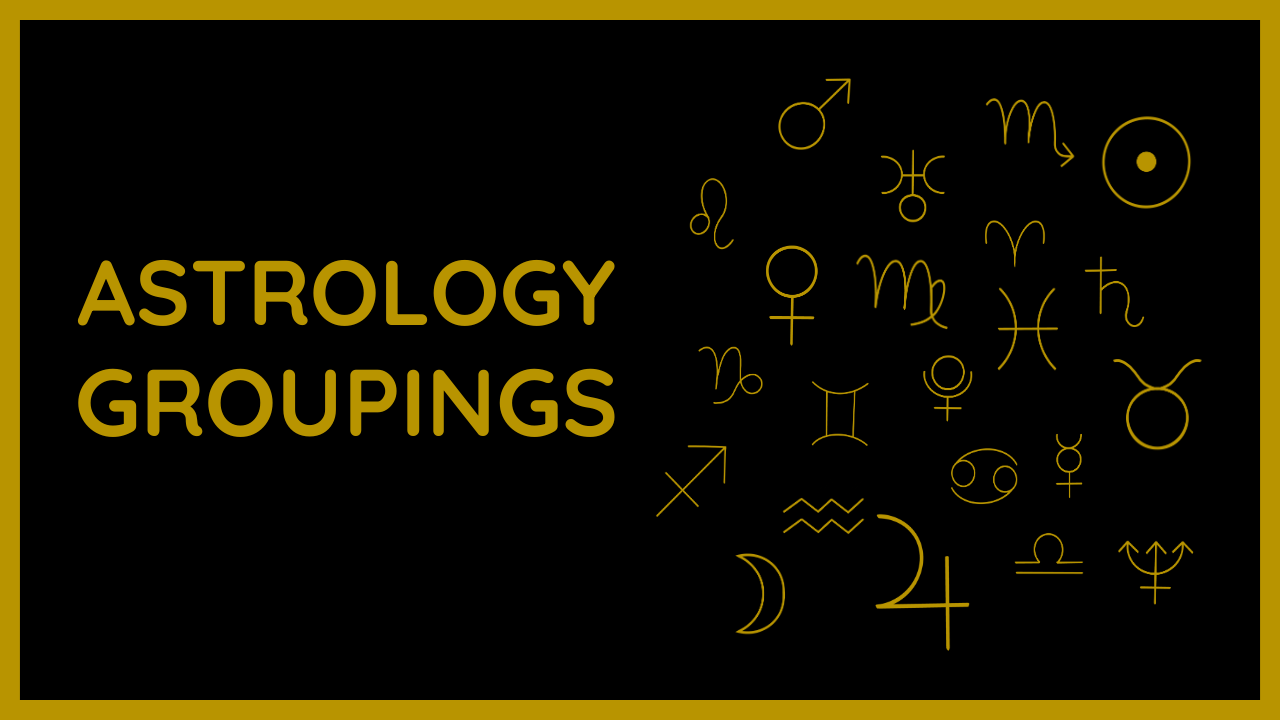
In modern astrology, the Signs and Houses have an almost symbiotic relationship where each Sign is associated with a House, and both have taken on the associations of each other.
The astrological new year is said to be when the Sun moves into Aries in March every year. It’s the beginning of spring in the northern hemisphere, which has come to symbolize the start of the zodiacal year and nature begins to come alive after winter. Aries is, therefore, seen as the first Sign of the Zodiac and has come to be associated with the 1st House. After that comes Taurus and the 2nd House, and so on. It looks something like this:
Aries → 1st House
Taurus → 2nd House
Gemini → 3rd House
Cancer → 4th House
Leo → 5th House
Virgo → 6th House
Libra → 7th House
Scorpio → 8th House
Sagittarius → 9th House
Capricorn → 10th House
Aquarius → 11th House
Pisces → 12th House
This will be explored more below.
Triplicity (Elements)
One very interesting grouping that can be telling about a chart are the triplicities, also known as the elements.
In the Western world (and Western astrology), there are 4 elements: Fire, Earth, Air, and Water. Each of the Zodiac Signs is connected to one of these elements. Since there are 12 Signs in the Zodiac, this also means that each element consists of 3 different Zodiac Signs.
Fire
The Fire Signs are:
Aries ♈️
Leo ♌️
Sagittarius ♐️
Water
The Water Signs are:
Cancer ♋️
Scorpio ♏️
Pisces ♓️
Fire Signs are enthusiastic, adventurous, and free-spirited by nature. They are bold and dramatic, dynamic and passionate, and they have a strong leadership ability.
However, as April Elliott Kent writes in The Essential Guide to Practical Astrology, like fire, the energies of these signs “can either be harnessed into helpful energy or flame up and cause destruction.” (Kent, 2023, p. 42).
Roy Gillett writes in The Secret Language of Astrology: The Illustrated Key to Unlocking the Secrets of the Stars:
“Fire can ignite instantly, then spread and consume all in its path. The essence of the element of fire is action and movement; saying ‘yes’, often without a thought for the consequences. But fire is the initiating of all that is created, and that means also gentler possibilities. […] Action can be expressed in many different ways: it may be constructive, creative, joyous, loving or triumphant; or it may be destructive, angry, brutal or violent.” (Gillett, 2012, p. 55).
While Carole Taylor writes, in Astrology: Using the wisdom of the stars in your everyday life: “When focused, fire can move mountains, sweeping everything along with enthusiasm, vision, and optimistic faith.” (Taylor, 2018, p. 28).
Earth
The Earth signs are:
Taurus ♉️
Virgo ♍️
Capricorn ♑️
Earth signs are practical and grounded, reliable and solid, and they can provide both protection and structure. The Earth Signs are also sensual.
Kent writes in her book:
“Earth signs are oriented towards practical experience and think in terms of doing rather than thinking, feeling, or imagining. […] When they’re out of balance, earth signs can be materialistic, unimaginative, and resistant to change. At their best, though, they provide the practical resources, analysis, and leadership to make dreams come true.” (Kent, 2023, p. 43).
While Taylor writes: “Theories and ‘what ifs’ do not suit this element, nor are planets in earth given to sentimentality.” (Taylor, 2018, p. 28).
Air
The Air Signs are:
Gemini ♊️
Libra ♎️
Aquarius ♒️
Air signs are communicative, intellectual, sociable, and collective-oriented.
Gillett writes this about the air element:
“The air we breathe appears to have no substance or form, and nor do our thoughts and anxieties. Hence the element air is related to these mental processes and, like the winged god Hermes or Mercury, to all forms of communication. Air describes our ideas and the words we find to express them, the story we tell, the letters and emails we send, the books and articles we write, the news we relate. Air also signifies the reassurance that leads to understanding and forgiveness, and the explanations and arguments we urge upon others. On the other hand, air can also relate to mental anxiety and neurosis. Misused, it can generate the lies, ‘spin’ and manipulation that draws us onto the rocks of disappointed hopes.” (Gillett, 2012, p. 56).
Kent writes: “Out of balance, they live in their heads and can be insensitive to the feelings of others. But at their best, air signs help us form connections in all spheres of our daily lives.” (Kent, 2023, p. 43).
Taylor writes that “planets in air tend to express themselves rationally and verbally, with all the emotional restraint that comes from this element’s association with polite interaction and civilized human relations.” (Taylor, 2018, p. 28).
Water signs are intuitive, emotionally intelligent, and empathic. The water signs are also considered psychically gifted.
Gillett writes that:
“Just as water can clear the most resistant blockages in nature, the elements of water is the force that helps us to find clarity and a way through emotional blockages, so that we may move forward with our lives. […] water as the force of nurture allows us to answer the needs of ourselves and others. Water is the element that draws us together.” (Gillett, 2012, p. 57).
Taylor writes that: “Water can appear in the natural world as a cleansing river, a raging torrent, a still dark lake, or the fathomless ocean. Planets in water act according to feeling, with sensitive intuition.” (Taylor, 2018, p. 28).
While Kent writes: “Out of balance, water signs are ruled by emotion, lack objectivity, and are too defensive to get close to other people. But at their best, water signs help us nourish, protect, and grow the interpersonal connections that give life meaning.” (Kent, 2023, p. 44).
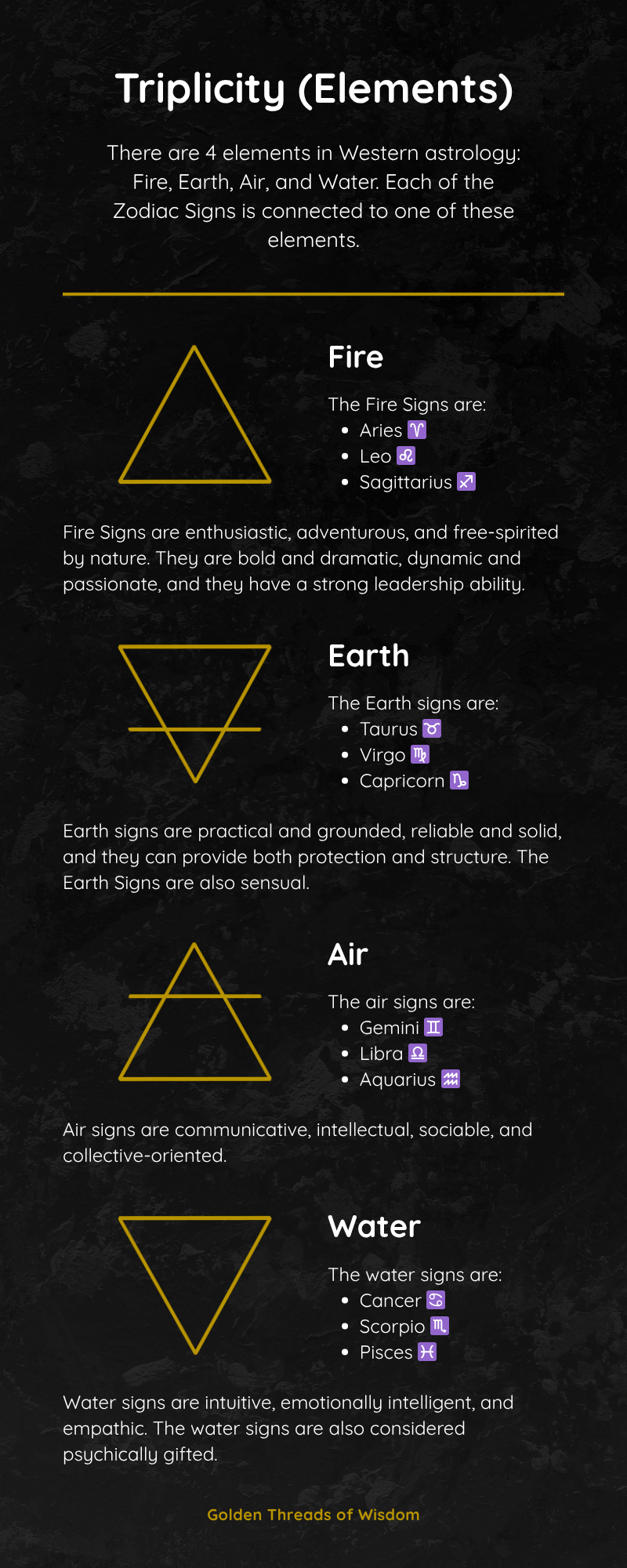
Here’s a summary of the triplicities in an infographic you can save to Pinterest or share on social media:
Quadruplicity
Another grouping of the zodiac signs is known as quadruplicity or the qualities or modalities of the signs. These are called cardinal, fixed, and mutable. Each of these categories contains 4 different signs.
As Kent writes: “Signs of the same quadruplicity tend to compete with each other and have different basic temperaments.” (Kent, 2023, p. 39).
Cardinal
The cardinal signs are:
Aries ♈️
Cancer ♋️
Libra ♎️
Capricorn ♑️
Cardinal signs initiate a new season and create a new reality. This self-starting part of the season signifies leaders, visionaries, trend-setters, and trailblazers. Cardinal signs also tend to be outgoing and have a tendency to help us move in new directions.
Kent writes that:
“The cardinal signs also enjoy the challenge of claiming territory. […] ‘my’ is a popular word among cardinal sign people. And wherever you find cardinal signs in your own birth chart, you tend to be an initiator—and a bit territorial as well.” (Kent, 2023, p. 40).
She continues to write that: “The drawback of cardinal signs is a tendency to start more things that you can possibly finish.” (Kent, 2023, p. 40).
Gillett writes:
“If taken to excess, cardinal force can agitate an overwhelm. To be told too often that all is well can convince us that it is not, and so create insecurity. To be pushing hither and thither and never be allowed to rest; to be continually reminded of our responsibilities, even guilt; to be constantly told what to do - all these are counterproductive.” (Gillett, 2012, p. 58).
Taylor writes that “planets in these signs take the initiative, in whatever way is appropriate to the element.” (Taylor, 2018, p. 28).
Fixed
The fixed signs are:
Taurus ♉️
Leo ♌️
Scorpio ♏️
Aquarius ♒️
Fixed signs move the season along; they move along the new reality that the Cardinal signs created. They keep everything going and signify those who are reliable, steadfast, stable, even stubborn and rigid in their opinions. Kent calls these signs the zodiac’s organizers.
Kent writes that: “They have a knack for knowing just how to approach a task to make sure it’s accomplished in the most efficient manner.” (Kent, 2023, p. 40-41).
While the fixity of the signs can be a blessing and a gift, Kent also writes that the fixed signs can have drawbacks “such as a tendency towards stubbornness and intractability. Fixed signs like the challenge of managing existing routines with ever more efficiency, rather than starting new enterprises or finding new ways of doing things. They can have trouble delegating duties and can have a very hard time seeing other points of view.” (Kent, 2023, p. 41).
Taylor writes that: “Planets in fixed signs are steadfast, good at holding and consolidating whatever is signified by the element.” (Taylor, 2018, p. 28).
Mutable
The mutable signs are:
Gemini ♊️
Virgo ♍️
Sagittarius ♐️
Pisces ♓️
Mutable signs deal with the changeable environment at the end of a season; they deal with the result of the Cardinal signs new reality and the Mutable signs work, and then take it upon themselves to wrap it all up before the next Cardinal sign creates a new reality. Blessed with the ability to adapt to change, they signify those who are highly versatile, multidisciplinary, and adaptable.
Kent writes:
“On the downside, mutable signs can be undependable, lacking in initiative, and disorganized. […] Sometimes a havy mutable sign emphasis results in a chronic inability to commit—to a job, to a relationship, or even to a set of values.” (Kent, 2023, p. 41).
Taylor writes that “planets in these signs are given to movement and change. Unlike cardinal, the movement has no focus; thus the mutable sign allows the unchecked flow of each element.” (Taylor, 2018, p. 28).
Polarity
You can look at the grouping of polarity in two ways. One of them is the positive and negative polarity (which can also include polarities like yin and yang, masculine and feminine, diurnal and nocturnal, quick and slow, hot and cold, etc.).
Another way to look at polarities is to look at the zodiac wheel and the relationship each sign has to the sign on the opposite side of the wheel.
Positive, Yang, Diurnal
The fire and air signs are diurnal, positive, yang, masculine:
Aries ♈️
Gemini ♊️
Leo ♌️
Libra ♎️
Sagittarius ♐️
Aquarius ♒️
The fire and air signs are outward, quick, and hot. They tend to be faster-paced and direct.
Taylor writes that: “The positive signs have an extroverted and upbeat quality, being outwardly oriented and needing the stimulus of external activity and interaction.” (Taylor, 2018, p. 28).
When describing the attitudes of the positive signs, Gillett writes: “The Sun shines for us, we view all as potentially bright and abundant. We trust out with the creative endeavour, without regard for barriers or reactions. We are certain that smiles, happiness and opportunity will not cease. Unstoppable and determined to succeed, we seek to further agendas by means of actions and intimidation, words and ideas. Not caring a jot for the consequences, we express raw archetypal male pride that brooks no resistance.” (Gillett, 2012, p. 53).
Negative, Yin, Nocturnal
The earth and water signs are nocturnal, negative, yin, feminine::
Taurus ♉️
Cancer ♋️
Virgo ♍️
Scorpio ♏️
Capricorn ♑️
Pisces ♓️
The earth and water signs are reflective and inward, slow and cold. They tend to be slower-paced and receptive.
Taylor writes that: “The negative signs are more introverted and low-key, focused on interior experience.” (Taylor, 2018, p. 28).
When describing the attitudes of the negative signs, Gillett writes: “Open, insatiable, deliciously receptive, needing and accepting, we absorb an embrace, offering reassurance to encourage more and more giving. We are always full of anticipation and ready for completion, but unlikely to feel we have it. Reflexive, critical and monitoring, we react seductively to encourage improvement in quality and experience, but really seem satisfied. Ever ready for more, this is the raw expression of archetypal female nurturing and need.” (Gillett, 2012, p. 53).
The Zodiac Signs Polarity
This refers to the relationship each Zodiac Sign has with the Sign directly opposite on the Zodiac wheel. This can be useful in many areas of a chart interpretation.
The following polarities exist:
Aries ♈️ / Libra ♎️
Cancer ♋️ / Capricorn ♑️
Taurus ♉️ / Scorpio ♏️
Leo ♌️ / Aquarius ♒️
Gemini ♊️ / Sagittarius ♐️
Virgo ♍️ / Pisces ♓️
We can also do the same with the Houses and look at the relationship they have to each other.
The axes between the Houses usually signify:
1st House / 7th House: Self / Other
2nd House / 8th House: My Resources / Shared Resources
3rd House / 9th House: Basic Learning / Higher Learning
4th House / 10th House: Private Life / Public Life
5th House / 11th House: Individual Force and Creativity / Collective Force and Creativity
6th House / 12th House: Physical Health / Spiritual Health
These are only examples of what these places in the chart signify in terms of their individual places and their relationship to the opposite House and Sign, but they are a good place to start to remember these polarities.
Other examples, like the 3rd/9th House axis, can also indicate learning/teaching, while the 5th/11th House can indicate individual/community.
House Groupings
First, I want to mention that there are different systems you can use for the houses. Whether you use an equal or an unequal system, there’s a possibility that you will get a very different result.
For example, I was born in a quite northern location, and if I were to use an unequal house system (like the popular Placidus), there are several of the houses in my chart that would be very small. If you live closer to the equator, that won’t be the case. So, it became a personal preference for me to use an equal house system instead. Some astrologers use all kinds of different house systems, so if you’re new to this, or if you’re just curious about the other systems, I would recommend that you try a different one and choose the one, or the ones, that you prefer.
I won’t go into details about that here (you can find more about this in the Houses section). However, whatever system you choose to use, each house falls into one of three different groups called angular, succedent, and cadent.
Angular
The 1st, 4th, 7th, and 10th Houses in each chart are called angular houses and are associated with the Cardinal signs. They are considered extra powerful, especially when they include a sensitive point called an angle.
The angles of the chart are:
The ascendant (a.k.a. the rising sign), which is the first house
The IC, which is (usually) the fourth house
The descendant, which is the seventh house
The midheaven (a.k.a. MC), which is (usually) the 10th house
(Note that the IC and MC are noted to usually appear in the fourth and 10th house, respectively; that’s because in certain house systems, they can appear in different houses.)
These houses “are the compass points that help you figure out where you are and to navigate the waters ahead.” (Kent, 2023, p. 112).
Succedent
The 2nd, 5th, 8th, and 11th Houses follow the angular houses. They are associated with the fixed signs, and these are the ones where we get grounded.
These houses “represent the processes that lend stability and security to our lives, our relationships, and even our society. […] These houses represent the cornerstones in the foundation of your life.” (Kent, 2023, p. 127-128).
Cadent
The 3rd, 6th, 9th, and 12th Houses follow the succedent houses. They are associated with the mutable signs.
Kent writes:
“In the cadent houses, you learn to dance with life by attuning yourself to its rhythms. […] In the cadent houses, you learn to handle the discord and tension that come just before release. You learn to adapt to new realities and to expand your effectiveness and consciousness. You learn to loosen your grip on structure and routine, in preparation for making changes.” (Kent, 2023, p. 141).
Ruling Planets
The final grouping I want to write about here is the planetary rulers of the signs. This means that each sign has a planet that rules the sign, is associated with the sign, and has similar associations with them that work together.
There are mainly two different ways that the rulers of the signs are categorized. One is the traditional rulership, which basically means the system that existed within astrology before the modern planets were discovered.
The second way of looking at this is through the modern rulership, which includes the modern planets of Uranus, Neptune, and Pluto.
Traditional Rulership
Within traditional astrology, only the planets that are visible to the naked eye are rulers of signs. The luminaries rule one sign each, while Mercury, Venus, Mars, Jupiter, and Saturn rule two signs each.
They are divided as follows:
The sun rules Leo ♌️
The moon rules Cancer ♋️
Mercury rules Gemini ♊️ and Virgo ♍️
Venus rules Taurus ♉️ and Libra ♎️
Mars rules Aries ♈️ and Scorpio ♏️
Jupiter rules Sagittarius ♐️ and Pisces ♓️
Saturn rules Capricorn ♑️ and Aquarius ♒️
Modern Rulership
Within the modern tradition, all luminaries and planets (including Pluto) rule a sign each.
They are divided as follows:
The sun rules Leo ♌️
The moon rules Cancer ♋️
Mercury rules Gemini ♊️ and Virgo ♍️
Venus rules Taurus ♉️ and Libra ♎️
Mars rules Aries ♈️
Jupiter rules Sagittarius ♐️
Saturn rules Capricorn ♑️
Uranus rules Aquarius ♒️
Neptune rules Pisces ♓️
Pluto rules Scorpio ♏️
I should also mention that many astrologers, while using the modern rulerships, still mention that, for example, Scorpio is ruled by Pluto and Mars.
I also want to mention that Julia and Derek Parker, in their book Parkers’ Astrology, mention that the rulership of Chiron is under discussion in the astrological community, that a possible rulership for Chiron is Virgo, and that they believe this will end up being Chiron’s rulership (Parker, 2020, p. 80-81).
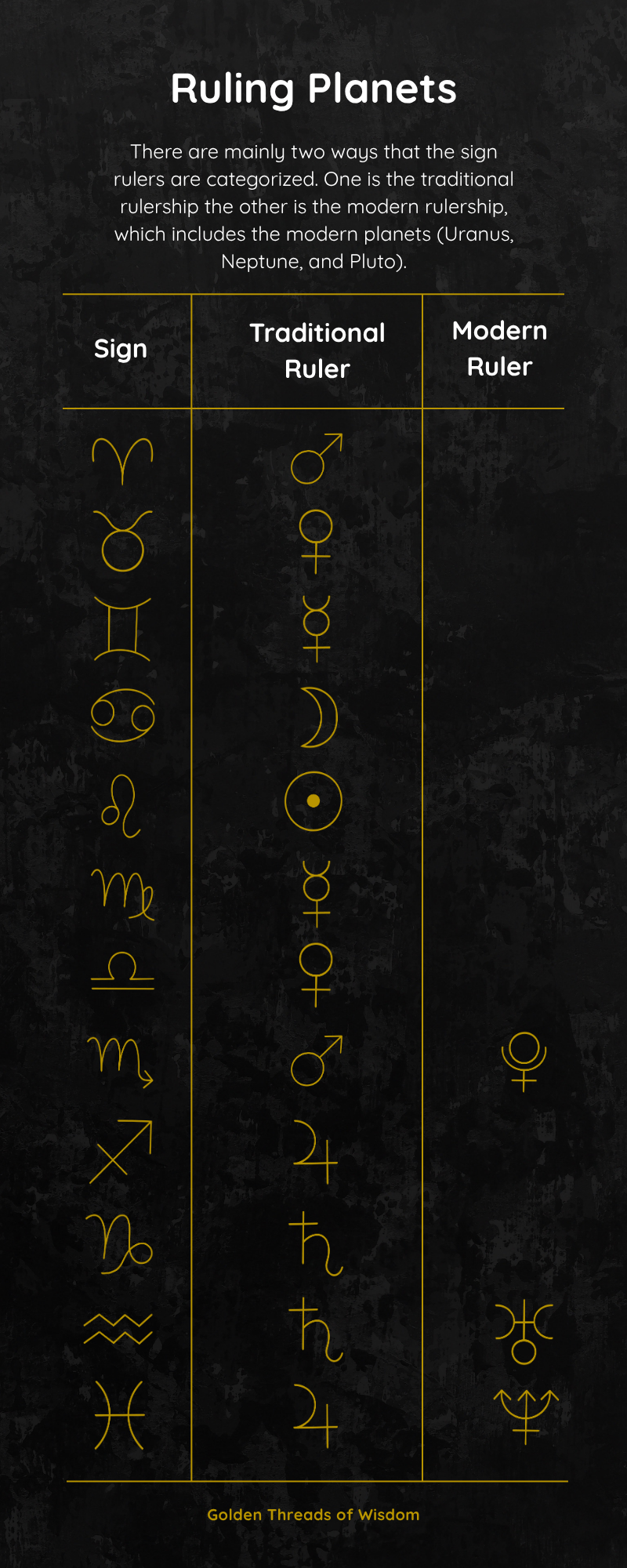
Here’s a summary of the signs and their rulers in an infographic you can save to Pinterest or share on social media:
Luminaries and Planets
I personally enjoy the way that April Elliott Kent, in Practical Astrology, describes the planets, signs, houses, and aspects of astrology by looking at them through the metaphor of a play. By looking at astrology from this perspective, the planets would represent the characters in the play, the signs would represent the characters' costumes and personalities, the houses would represent the setting where the scenes of the play take place, and the aspects would represent the dialogue between the characters (Kent, 2023, p. 4-5).
In other words, now that we have reached the planets, we are looking at the characters who are acting in the big play that is astrology.
Sun
Fast Facts
Keywords: Self-expression, charisma, vitality, radiant energy, purpose, life goals, creative power, ego, inner authority, self-development.
Domicile: Leo
Detriment: Aquarius
Exaltation: Aries
Fall/Depression: Libra
Energy: Yang
Number: 1
Day of the Week: Sunday.
Colors: gold, orange, yellow.
Anatomy: heart, upper back, spleen, circulatory system, sperm, right eye (male), left eye (female).
Metal: gold
Stones: amber and Topaz
Plants: sunflower and birch
Joy in the 9th House of the God
It takes the Sun a year to go through all twelve signs of the zodiac

Symbolism
The Sun is at the center of our solar system and is the light bringer. In order for us to see things, there needs to be light. The Sun illuminates things.
Because the Sun is at the center of our solar system, it’s also connected to the ego and “being the center of the universe” or the center of attention. “The Sun is our source of life and energy, around which everything revolves” (Taylor, 2018, p. 62). It can also indicate the core of someone’s being, which might be why the Sun in modern astrology is often associated with the spirit/soul, ego, and our personality. The Sun’s placement often shows where we or our power shines brightest.
The Sun also connects to leadership, the King, the head of state, the father, etc. It signifies notable figures who are often at the top of the hierarchy, but it can also refer to those at the “center of the stage” at any given time (like famous people at the height of their careers or fame). Since it is connected to leadership, it’s also connected to decisiveness, getting organized, and taking action. That’s what leaders do to get the job done. In that way, it also signifies willpower and where and how it is strongest.
The Sun can also connect to individuality since it is connected to leaders and people who are in the limelight at any given time.
In contrast to the Moon, the Sun is more abstract than tangible. While the Moon is connected to the body, the Sun is connected to the mind.
Also, in contrast to the Moon, the Sun can symbolize communities of men.
Of course, the Sun is as important to us as individuals (in our birth charts) as it is to all life here on earth, which is, most likely, one of the reasons why it’s one of the big three talked about in astrology (the Sun, the Moon, and the Rising sign).
Richard Tarnas summarizes the Sun’s correspondences and archetype in the following way in Cosmos and Psyche:
“the central principle of vital creative energy, the will to exist; the impulse and capacity to be, to manifest, to be active, to be central, to radiate, to ‘shine’; to rise above, achieve, illuminate, and integrate; the individual will and personal identity, the seat of mind and spirit, the animus, the executive functions of the self or ego, the capacity for initiative and purposeful assertion, the drive for individual autonomy and independence; directed and focused consciousness and self-awareness, the centrifugal expression of the self, the trajectory of self-manifestation, ascent and descent; the ruler of the day sky, of the clearly visible, the single source of luminosity that overcomes the encompassing darkness, the monocentric; yang; the part that contains the whole in potentia; Sol and all solar deities, the archetypal Hero in its many forms.” (Tarnas, 2006, ch. 3).
The position of where the Sun is in a chart “reveals how our light shines – how we seek to project ourselves upon, and influence, our family, friends and society. The Sun represents all those experiences that make us believe in ourselves. It determines how we create, not only artistically, but also in terms of having fun, of experiencing pleasure ourselves and bringing it to others. This planet also symbolizes the breathless, naïve joy of childhood and youth, those times when all seems possible, so long as we, like the Sun, just keep moving on.” (Gillett, 2012, p. 29).
Moon
Fast Facts
Keywords: Physical, emotional response, how we react, instinct, intuition, familiarity, nurture, fluctuation, cyclical, rhythms, security, home
Domicile: Cancer
Detriment: Capricorn
Exaltation: Taurus
Fall/Depression: Scorpio
Energy: Yin
Anatomy: Stomach, breasts, digestive system, fluids and glandular secretions, left eye (male), right eye (female)
Number: 2 and 7
Day of the Week: Monday
Colors: White, silver
Metal: Silver
Stones: Crystal, mother of pearl, moonstone
Plants: Willow
Joy in the 3rd House of the Goddess
It takes the Moon twenty-eight and a half days to go through all twelve signs of the zodiac
Symbolism
In general, the Moon often represents something internal, the emotions, but also the body. In modern astrology, the Moon is often summarized to indicate a person’s emotions and needs, and its placement often indicates how someone deals with their emotions and needs, as well as how they express, or don’t express, them.
“The Moon can make one patient on a good day or a changeable and narrow-minded on a bad one; alternatively, it can make one imaginative and sympathetic, but at times perhaps somewhat unreliable.” (Parker, 2020, p. 78).
Since the Moon usually appears at night, when people are asleep, it often operates on a subconscious level and represents sublevel themes. That can include dreams, beliefs, and our memories.
The Moon can be viewed as our most personal planet because it is the closest planet to us in our solar system, and because it changes signs every 2-3 days. The Moon’s effects on the Earth––for example, the effects it has on our oceans––are also well-documented. Since it is the planet closest to the Earth, it is also pretty “earthy” in character, which is interesting since it’s exalted in, arguably, the most earthy sign, which is Taurus.
The Moon is also connected to the mother, or other mother figures. In that way, it’s also connected to the original mother, Mother Earth, who gave us all life and continues to sustain us. This, in combination with how the Moon affects the water on Earth, can also connect the Moon to the food we eat, as all our crops need both earth and water to grow.
Since the Moon is also connected to the menstrual cycle, it has another layer of being associated with fertility and creative power, beyond the fertility and creativity of Mother Earth. To me, personally, however, I don’t limit that to physical procreation. You can be fertile with ideas and use your creative power to make art, for example, as this kind of fertility and creativity also comes and goes in seasons, just like the waxing and waning of the Moon.
Since the Moon is constantly changing, waxing and waning, it has an adaptable nature. It can also be fleeting and teach us that nothing lasts forever and that seasons come and go.
Due to the Moon being connected to the mother, or other mother figures, and with Cancer (since the Moon is the ruler of Cancer), which is often conflated with the themes of the 4th House in modern astrology, it’s also often associated with someone’s home and relationship to family, especially mother figures. Due to this conflation of Cancer with the 4th House, the Moon is often also associated with our roots and ancestry.
The Moon can also represent communities of women and women’s circles, and the placement in a chart can indicate the kind of relationships one wants with women, communities of women, etc.
Richard Tarnas summarizes the Moon’s correspondences and archetype in the following way in Cosmos and Psyche:
“the matrix of being, the psychosomatic foundation of the self, the womb and ground of life; the body and the soul, that which senses and intuits, the feeling nature; the impulse and capacity to gestate and bring forth, to receive and reflect, to relate and respond, to need and to care, to nurture and be nurtured, the condition of dependence and interdependence; the diffusely conscious and the unconscious, the anima, the immanent, the centripetal, the home, the fertile source and ground; the cycle of manifestation, the waxing and waning, the eternal round; the ruler of the night sky, of the diffusely visible and the invisible, multiple sources of luminosity within the encompassing darkness, the polycentric; yin; the whole that contains the part in potentia; Luna and all lunar deities, the Great Mother Goddess, together with aspects of the Child (puella, puer), constituting the relational matrix of life.” (Tarnas, 2006, ch. 3).
When we look at the position of the Moon in our chart, “our way of reassuring others will become clear, as will the way we wish them to reassure us. […] As the Moon reflects the sunlight, so it may be wise to see ourselves and our actions in the eyes of others, and be open to adjusting our behaviour accordingly. In this way, we can nurture each other, harnessing the energy of the Moon to nurse the infant with us.” (Gillett, 2012, p. 31).
Mercury
Fast Facts
Keywords: Mind, perception, communication (mental and physical), language, how we think, ideas, education and learning, skills, thoughts and opinions, trade and commerce
Domicile: Gemini
Detriment: Sagittarius
Domicile/Exaltation: Virgo
Detriment/Fall/Depression: Pisces
Anatomy: Hands and arms, respiratory system, hormones, nervous system, brain, eyes, mouth, tongue
Number: 5
Day of the Week: Wednesday
Colors: Grey, multicolors
Metal: Mercury (quicksilver) and platinum
Stones: Agate
Plants: Hazel
Joy in the 1st House of the Helm
Mercury spends approximately three weeks in each sign when it’s direct
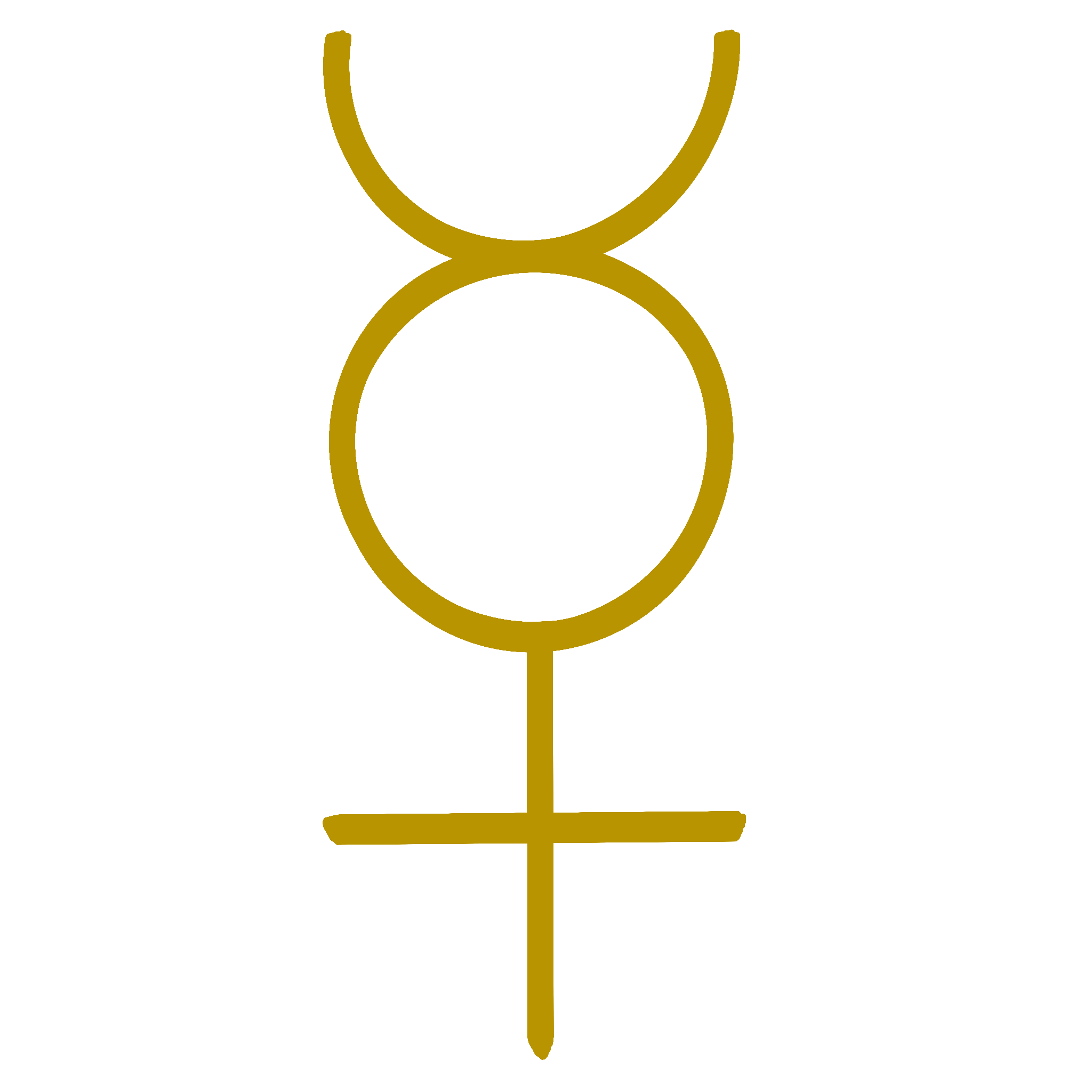
Symbolism
Mercury is one of those trickster planets that you’re not quite sure whether it’s working for or against you. It’s a planet that’s retrograde around three times per year (for about three weeks at a time), “seeming to disappear into the Sun's rays, hence its reputation as trickster and underworld guide.” (Taylor, 2018, p. 66). While retrograde, there’s often some general turbulence in communication, especially, since Mercury is connected to communication (both verbal and non-verbal).
Mercury doesn’t just signify communication, however. It’s also connected to writing, education, interpretation, sending messages, etc. So it signifies a lot of communication, use of language, and receiving information. Therefore, it’s also interesting that Mercury rules the hands, the hearing, the windpipe, and the tongue, which are all used for different ways of communication and of hearing what’s being communicated. Its job is basically to transmit and convey information and messages. Whether or not the messages are conveyed in the way that we want to or intended to depends on Mercury’s condition. Whether we are more internal or external with our messages, information, and communication also depends on the condition.
Mercury also has an adaptive quality. It’s a Shapeshifter. It can take on qualities from the planets it has a relationship to, as well as the environment it’s in, which means that it can be both benefic and malefic and everything in between. It can also have yin and yang qualities depending on whether it’s in conjunction with a planet that has a yin or yang quality, or none if it’s alone and unaspected.
The relationship between Mercury and the Sun can also be an indication of how one communicates. The Sun represents the mind and how we think, whereas Mercury is about how we transmit and convey those thoughts and that information. So the relationship between the Sun and Mercury in a chart signifies things like whether the mind and the way of communication are on the same page or not. It can also signify miscommunication and difficulty in communicating the thoughts and ideas of a more erratic mind, just to give a few examples.
Mercury’s adaptability can also show up in the style in which something is communicated. So, for example, if Mercury is in a relationship with Venus, information and the messages can be conveyed through poetry or other artistic fields, whereas a relationship to Mars might transmit the information and messages in a more direct, aggressive, edgy, cutting kind of way.
For as long as I’ve been into astrology, I’ve personally always thought of a direct Mercury to signify “pushing” information out, like speaking or teaching, while Mercury retrograde is more about taking information in, by, for example, researching and learning.
In contrast to Jupiter, Mercury is the smallest planet in our solar system, whereas Jupiter is the biggest. So while Jupiter focuses on big, broader, overarching ideas, Mercury focuses on the smaller details and is more methodical in taking in and processing information.
Richard Tarnas summarizes Mercury’s correspondences and archetype in the following way in Cosmos and Psyche:
“the principle of mind, thought, communication, that which articulates the primary creative energy and renders it intelligible; the impulse and capacity to think, to conceptualize, to connect and mediate, to use words and language, to give and receive information; to make sense of, to grasp, to perceive and reason, understand and articulate; to transport, translate, transmit; the principle of Logos; Hermes, the messenger of the gods.” (Tarnas, 2006, ch. 3).
Wherever Mercury is in our chart is where “we are likely to show a versatile, inventive, inquisitive, and curious - even a childlike or mischievous - response.” (Taylor, 2018, p. 67).
Venus
Fast Facts
Keywords: Harmony, unison, relationships, romance, love and erotic love, sexual desire, pleasure, enjoyment, beauty, attraction, aesthetics, finances, values, all kinds of art
Domicile: Taurus & Libra
Detriment: Aries & Scorpio
Exaltation: Pisces
Fall/Depression: Virgo
Energy: Yin
Anatomy: Throat, cheeks, sense of taste, kidneys, ovaries, internal reproductive organs, venous blood circulation, skin's sensory organs
Number: 6
Day of the week: Friday
Colors: Green
Metal: Copper
Stones: Emerald
Plants: Rose
Joy in the 5th House of Good Fortune
Venus spends approximately three and a half weeks in each sign
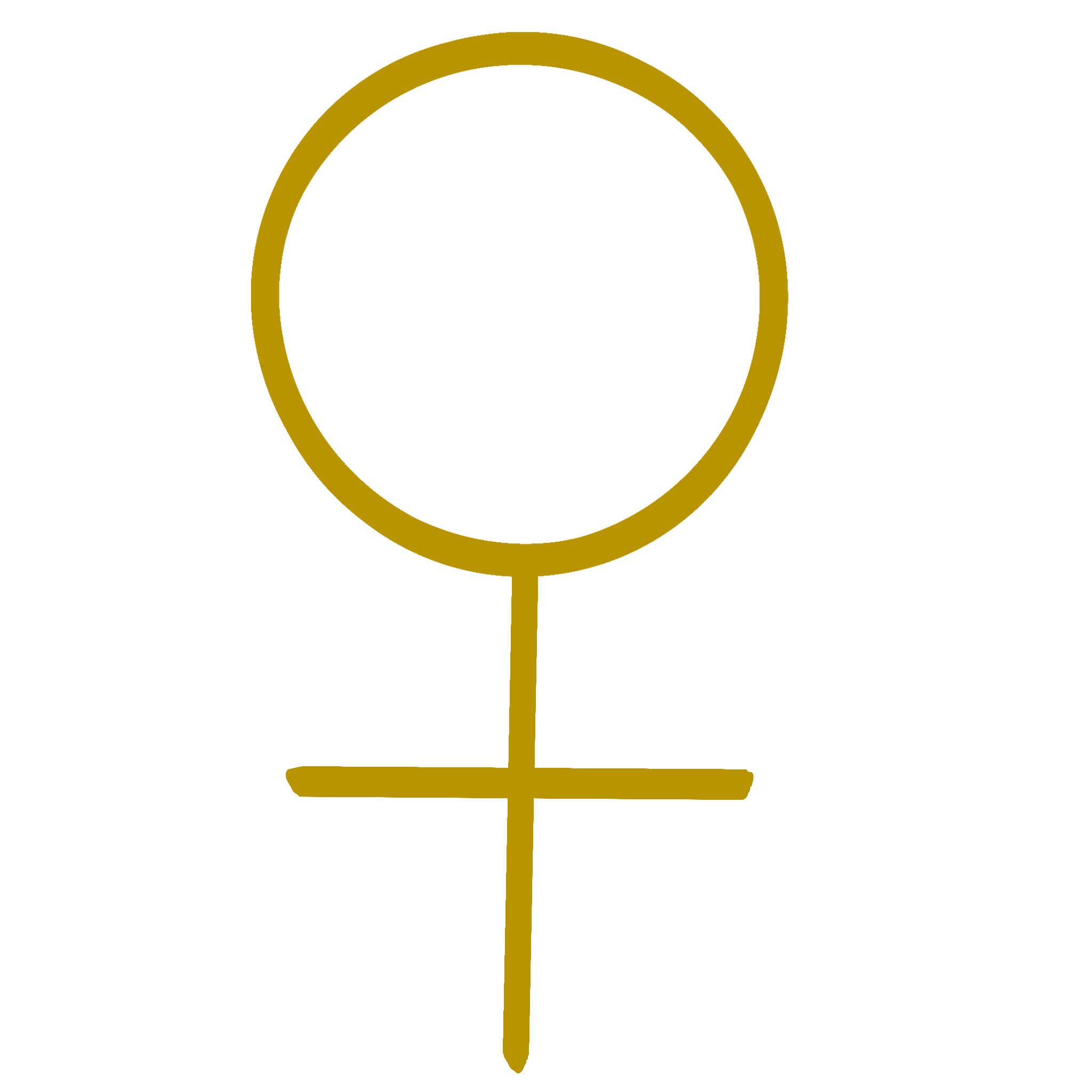
Symbolism
Venus is a benefic planet that’s often, in modern astrology, reduced to being about love and beauty. But it’s also associated with companionship, friendship, partnership, etc. All kinds of relationships, really.
While love is only one facet, Venus is also connected to sex, pleasure, and desire, which may or may not have anything to do with love. Another side of that can be obsession.
“Venus encourages gentleness, friendliness, tact and the social graces – but under stress its influence can make one indecisive, careless, over-romantic and over-dependent on other people.” (Parker, 2020, p. 79).
Venus is also connected to art, artists, adornment, and crafts that connect with adornment, like jewelry, garments, spinning of gold threads, etc. Venus placements can also give us a clue as to what we find beautiful and what we’re attracted to. Not only in a partner, but also the kind of art we find beautiful, the topics that pique our interest, or our personal style or ways of self-expression, etc.
“Since Venus offers an image of what we desire and what brings us joy, it is fundamental to feelings of worth and value - the kind of things we might feel moved to spend money on” (Taylor, 2018, p. 69).
Venus is also connected to women, femmes, and the feminine. While women and the feminine are traditional significators, the topics of gender at large and equality for all are also highlighted. While Venus is signified by love and harmony, she’s also adamant in standing up for what she believes in. There’s an activist and human rights quality about her, which is often tied to topics like gender, sexuality, and equality for all, to name a few. This is why I also connect Venus to our values and integrity. Who or what do we love, or are willing to love enough, to stand up for them or it?
In traditional astrology, there are only two planets out of the traditional seven planets that are considered feminine in energy, which are the Moon and Venus. So these two planets have a lot of significations relating to women and the feminine jammed into them or assigned to them. There may be some overlapping significations when it comes to women and the feminine.
Richard Tarnas summarizes Venus’s correspondences and archetype in the following way in Cosmos and Psyche:
“the principle of desire, love, beauty, value; the impulse and capacity to attract and be attracted, to love and be loved, to seek and create beauty and harmony, to engage in social and romantic relations, sensuous pleasure, artistic and aesthetic experience; the principle of Eros and the Beautiful; Aphrodite, the goddess of love and beauty.” (Tarnas, 2006, ch. 3).
Wherever Venus is in our chart, it’s where “we desire to form bonds with others, requiring feedback and response; thus we can look at this planet to describe all manner of one-to-one relationships, including friendships” (Taylor, 2018, p. 69). And since “Venus is known as the peacemaker […] Conflict is unwelcome wherever Venus is in your chart” (Taylor, 2018, p. 69).
Mars
Fast Facts
Keywords: Physical energy, capacity for action, how we act, initiative, courage and daring, competition, survival, strength, anger, conflict, aggression, fighting spirit, vitality, sexual drive, sexuality
Domicile: Aries & Scorpio
Detriment: Libra & Taurus
Exaltation: Capricorn
Fall/Depression: Cancer
Energy: Yang
Anatomy: Head and face, adrenal glands, external reproductive organs, muscles
Number: 9
Day of the week: Tuesday
Colors: Red
Metal: Iron
Stones: Garnet, ruby, and jasper
Plants: Cedar and holly
Joy in the 6th House of Bad Fortune
Mars spends approximately forty days in each sign
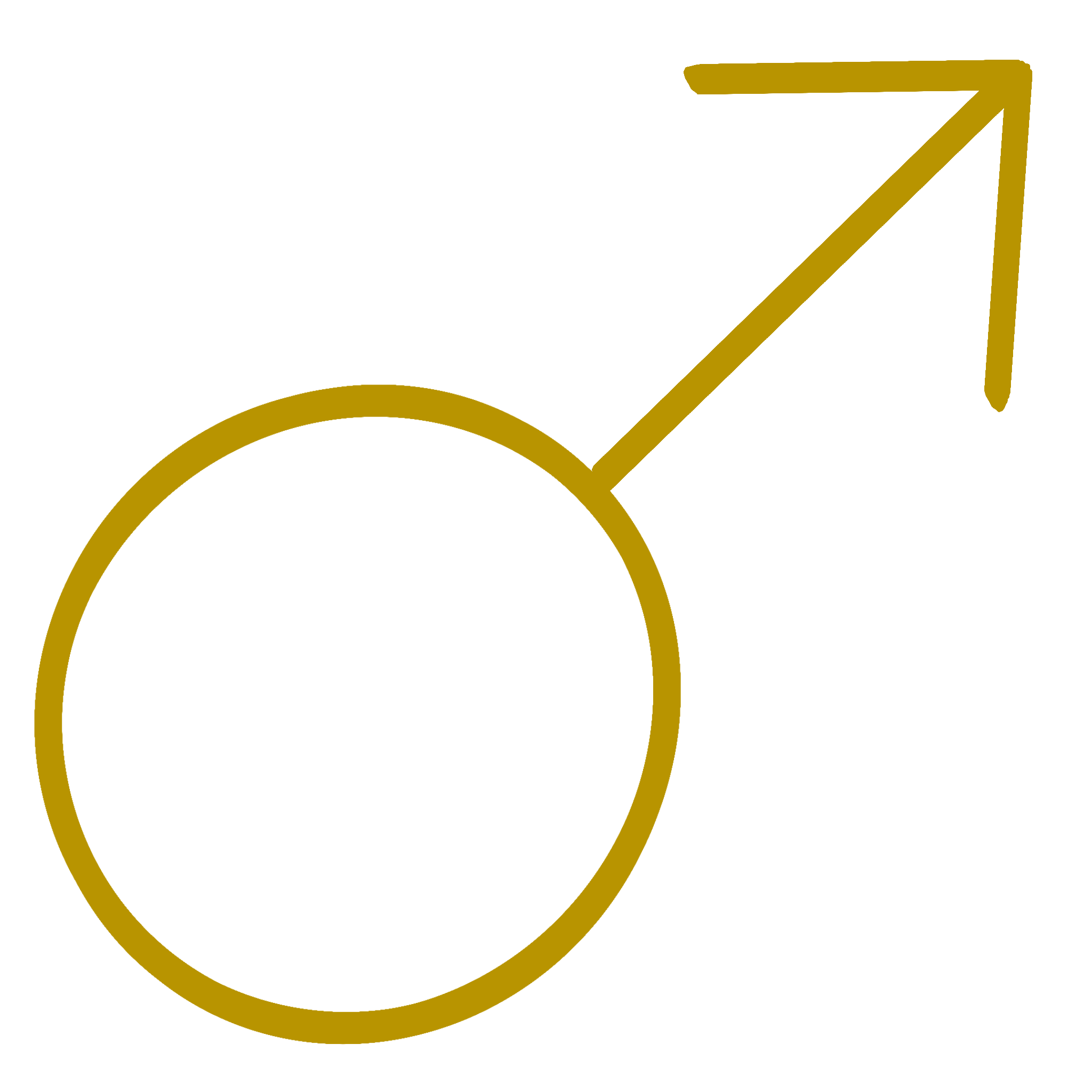
Symbolism
Mars is a malefic planet that’s connected to war, violence, conflict, anger, and fiery impulses. It can be both something you partake in yourself, something that’s done to you, or something you work with (i.e., you might funnel your anger into activism, you might have a tendency to get pulled into bar fights, or you might work with domestic violence victims, etc.).
Mars also has a sharpness and cutting quality to it, so it can manifest as scars on the body, or perhaps you work with sharp tools, like a surgeon or barber.
Mars is also associated with energy and vitality, as well as desire, courage, determination, taking action, and decisiveness. As I mentioned in the section about Ares above, his union with Aphrodite resulted in the birth of Eros, the god of love and sex. In other words, there’s a need for both the energies of Venus and Mars in romantic relationships where love, companionship, desire, passion, sex, etc., are part of the relationship. Venus is the love, companionship, pleasure, and sweetness, while Mars is the courage, willpower, and decisiveness to take the first step and keep the relationship going. It’s difficult for one to fully function without the other.
Mars also “inspires us to feats of courage and heroism, each in our own unique style. Bravery can be shown in many ways - physical, mental, emotional, intellectual [...] Under the auspices of Mars comes life’s pioneers, conquerors, entrepreneurs, adventurers, and sportsmen; but we should not forget that, in small ways, we each show these qualities daily in our lives. Courage comes in many different forms, and we are all capable of great strength.” (Taylor, 2018, p. 71).
Richard Tarnas summarizes Mars’s correspondences and archetype in the following way in Cosmos and Psyche:
“the principle of energetic force; the impulse and capacity to assert, to act and move energetically and forcefully, to have an impact, to press forward and against, to defend and offend, to act with sharpness and ardor; the tendency to experience aggressiveness, anger, conflict, harm, violence, forceful physical energy; to be combative, competitive, courageous, vigorous; Ares, the god of war.” (Tarnas, 2006, ch. 3).
Wherever Mars is in the chart, it “suggests where and how you might be prepared to ‘go the extra mile’ to succeed.” (Taylor, 2018, p. 71).
In other words, Mars’s position “indicates the nature and strength of the way we act: whether we address challenges or avoid them; whether we work with or around what confronts us in life; whether we displayed courage and confidence, or an inclination to dissemble; whether we respond quickly or slowly, with or without considering our options.” (Gillett, 2012, p. 37).
Jupiter
Fast Facts
Keywords: Good fortune, blessings, optimism and enthusiasm, expansion (intellectual and physical), the higher mind, adventure, opportunities, abundance, possibilities, ethics, morals, benevolence
Domicile: Sagittarius & Pisces
Detriment: Gemini & Virgo
Exaltation: Cancer
Fall/Depression: Capricorn
Energy: Yang
Anatomy: Liver, thighs, hips, blood circulation, pancreas, right ear
Number: 3
Day of the Week: Thursday
Colors: Purple
Metal: Tin
Stones: Sapphire, amethyst, and turquoise
Plants: Oak and poplar
Joy in the 11th House of Good Spirit
Jupiter spends approximately one year in each sign
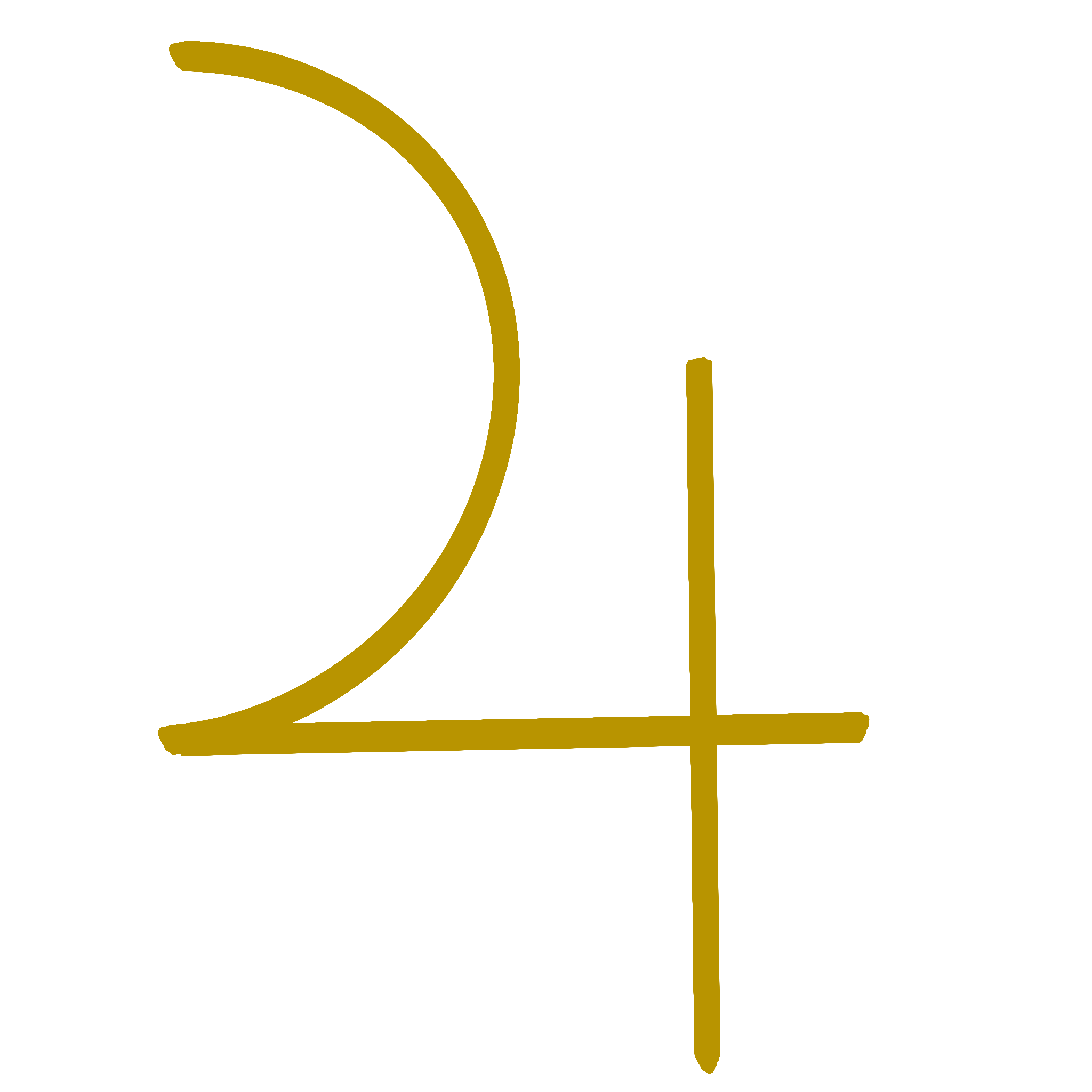
Symbolism
Jupiter is the greater benefic planet. Traditionally, it’s the most benefic planet. It’s also the biggest planet in our solar system, so a lot of its significations are about big things. It’s connected to abundance, growth, expansion, and grandness. It can manifest as a desire and a capacity to reach for more.
Jupiter also signifies generosity, goodwill, donations, being just or acting justly, etc. On the other hand, Jupiter can also signify a materialistic attitude and greed if it's in an unfavorable condition. Similarly, it’s also connected to pride and arrogance. Jupiter can also indicate excess and overdoing things (perhaps like Zeus overdoing things in his various lusty pursuits).
Jupiter is also connected to knowledge, philosophy, spirituality, contemplation, moral and religious aspirations, a search for truth, etc. Sometimes, when Jupiter is in unfavorable conditions, it can also signify a rigidity in these aspects, for example, being narrow-minded or only seeing one perspective and calling it truth.
Jupiter is also connected to hope and optimism. It’s also a planet that tends to say yes to things (as opposed to Saturn, which usually says no to things).
So, basically, Jupiter signifies “lawyers and legal systems, universities and colleges, religious organizations, publishing houses, and the gambling industry. A Jupitarian an object might be a lottery ticket or a hot-air balloon.” (Taylor, 2018, p. 74).
Richard Tarnas summarizes Jupiter’s correspondences and archetype in the following way in Cosmos and Psyche:
“the principle of expansion, magnitude, growth, elevation, superiority; the capacity and impulse to enlarge and grow, to ascend and progress, to improve and magnify, to incorporate that which is external, to make greater wholes, to inflate; to experience success, honor, advancement, plenitude, abundance, prodigality, excess, surfeit; the capacity or inclination for magnanimity, optimism, enthusiasm, exuberance, joy, joviality, liberality, breadth of experience, philosophical and cultural aspiration, comprehensiveness and largeness of vision, pride, arrogance, aggrandizement, extravagances; fecundity, fortune and providence; Zeus, the king of the Olympian gods.” (Tarnas, 2006, ch. 3).
Jupiter, depending on placement and condition, can either help you to think big or to think small. Wherever Jupiter is in a chart, you might find good fortune, opportunities, adventure, and confidence. “A well-placed Jupiter can help us to advise and support others in liberating ways.” (Gillett, 2012, p. 39).
However, I can also signify hubris: “Jupiter is a dominating presence, and it’s possible for you to believe that your way is the only right way. Jupiter’s effect is to desire bigger and better, which can lead to you squandering what you have.” (Taylor, 2018, p. 74).
Saturn
Fast Facts
Keywords: Stability, structure and order, rules, restriction, limitation, concentration, patience, discipline, responsibility, hard work, control, authority, formal, dignity, tradition, wisdom, aging
Domicile: Capricorn & Aquarius
Detriment: Cancer & Leo
Exaltation: Libra
Fall/Depression: Aries
Energy: Yin
Anatomy: Skin, skeleton, teeth, ligaments, knees, gallbladder
Number: 8
Day of the Week: Saturday
Colors: Black
Metal: Lead
Stones: Jet, onyx, and black diamond
Plants: Thistle, yew, ash, alder, and cypress
Joy in the 12th House of Bad Spirit
Saturn spends approximately two and a half years in each sign
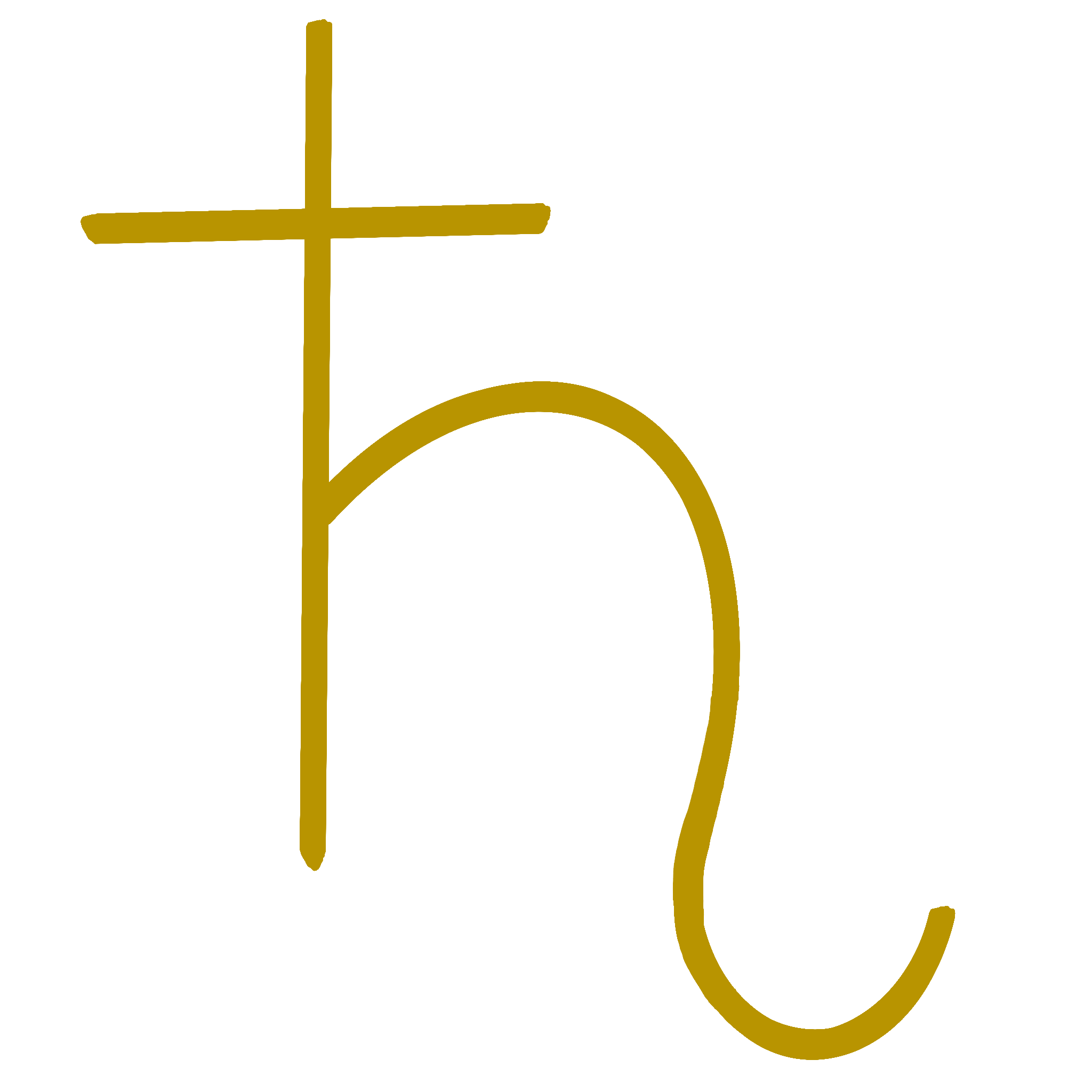
Symbolism
Saturn is a greater malefic planet. Traditionally, it’s the most malefic planet. It’s connected to slower malefic aspects, as opposed to Mars, which is more fiery, fast, and sudden. As alluded to above, Saturn is also connected to time. So, aging is connected with Saturn. And, as opposed to Mars, Saturn doesn’t rush into things.
Just like with Mars, Saturn can also signify those who work with people who struggle with common themes of these planets. Mars, which can spark accidents and cause wounds, can also signify the surgeons who take care of and heal those wounds. Likewise, while Saturn can be an indication of sorrow, grief, and depression, it can also signify someone who works as a therapist to help others with these struggles.
Scarcity, fear, and pessimism are also connected to Saturn, which are in contrast to the greater benefic Jupiter’s optimism, hope, and abundance. All of these traits can manifest in both positive and negative ways, though.
Many also associate karma with Saturn, which might be based on the myth that Kronos would be defeated by his children, the way he’d defeated his own father, Ouranos.
On the more positive side, Saturn is also associated with hard work, the slow and steady kind that builds metropolises, art, businesses, etc., that can last for centuries. Similarly to this, it can also indicate skills that you work on, grow, and perhaps even perfect over time. In addition, it’s associated with discipline, accountability, and responsibility. So, what is it that you want to build, or what skills do you want to acquire? Are you willing to put in the discipline to do that? And are you ready to face the results and consequences of it?
“With Saturn as our guide, we become more powerful by working with and mastering problems. The strength of Saturn will sustain us, whatever happens.” (Gillett, 2012, p. 41).
Richard Tarnas summarizes Saturn’s correspondences and archetype in the following way in Cosmos and Psyche:
“the principle of limit, structure, contraction, constraint, necessity, hard materiality, concrete manifestation; time, the past, tradition, age, maturity, mortality, the endings of things; gravity and gravitas, weightiness, that which burdens, binds, challenges, fortifies, deepens; the tendency to confine and constrict, to separate, to divide and define, to cut and shorten, to negate and oppose, to strengthen and forge through tension and resistance, to rigidify, to repress, to maintain a conservative and strict authority; to experience difficulty, decline, deprivation, defect and deficit, defeat, failure, loss, alienation; the labor of existence, suffering, old age, death; the weight of the past, the workings of fate, character, karma, the consequences of past action, error and guilt, punishment, retribution, imprisonment, the sense of ‘no exit’; pessimism, inferiority, inhibition, isolation, oppression and depression; the impulse and capacity for discipline and duty, order, solitude, concentration, conciseness, thoroughness and precision, discrimination and objectivity, restraint and patience, endurance, responsibility, seriousness, authority, wisdom; the harvest of time, effort, and experience; the concern with consensus reality, factual, concreteness, conventional forms and structures, foundations, boundaries, solidity and stability, security and control, rational organization, efficiency, law, right and wrong, judgment, the superego; the dark, cold, heavy, dense, dry, old, slow, distant; the senex, Kronos, the stern father of the gods.” (Tarnas, 2006, ch. 3).
He also goes on to write that, since Saturn was the furthest away planet that could be seen with the naked eye, and thereby the slowest moving, Saturn became associated with aspects of that: “the ruler of boundaries and limits, of finitude and endings, of distance, slowness, age, time, death, and fate.” (Tarnas, 2006, ch. 3).
Wherever Saturn is in your chart, it’s where you need to take responsibility. “It’s the planet of problems, and hardship, yes; but more importantly, it’s the planet of proving to yourself and the world that you can overcome those problems and hardships. That you, and you alone, are the author of your fate.” (Kent, 2023, p. 183).
Uranus
Fast Facts
Keywords: Change, disruption, shock, unexpected events, awakening, independent, freedom, rebellious, originality, revolution, innovation, science, electricity, the future, the unconventional and non-normative
Domicile: Aquarius (in modern astrology)
Detriment: Leo (in modern astrology)
Anatomy: Angles, nervous system, body, electricity, circulatory system
Colors: Electric blue
Metal: Uranium and copper
Stones: Turquoise and malachite
Discovered in 1781.
Uranus spends approximately seven years in each sign
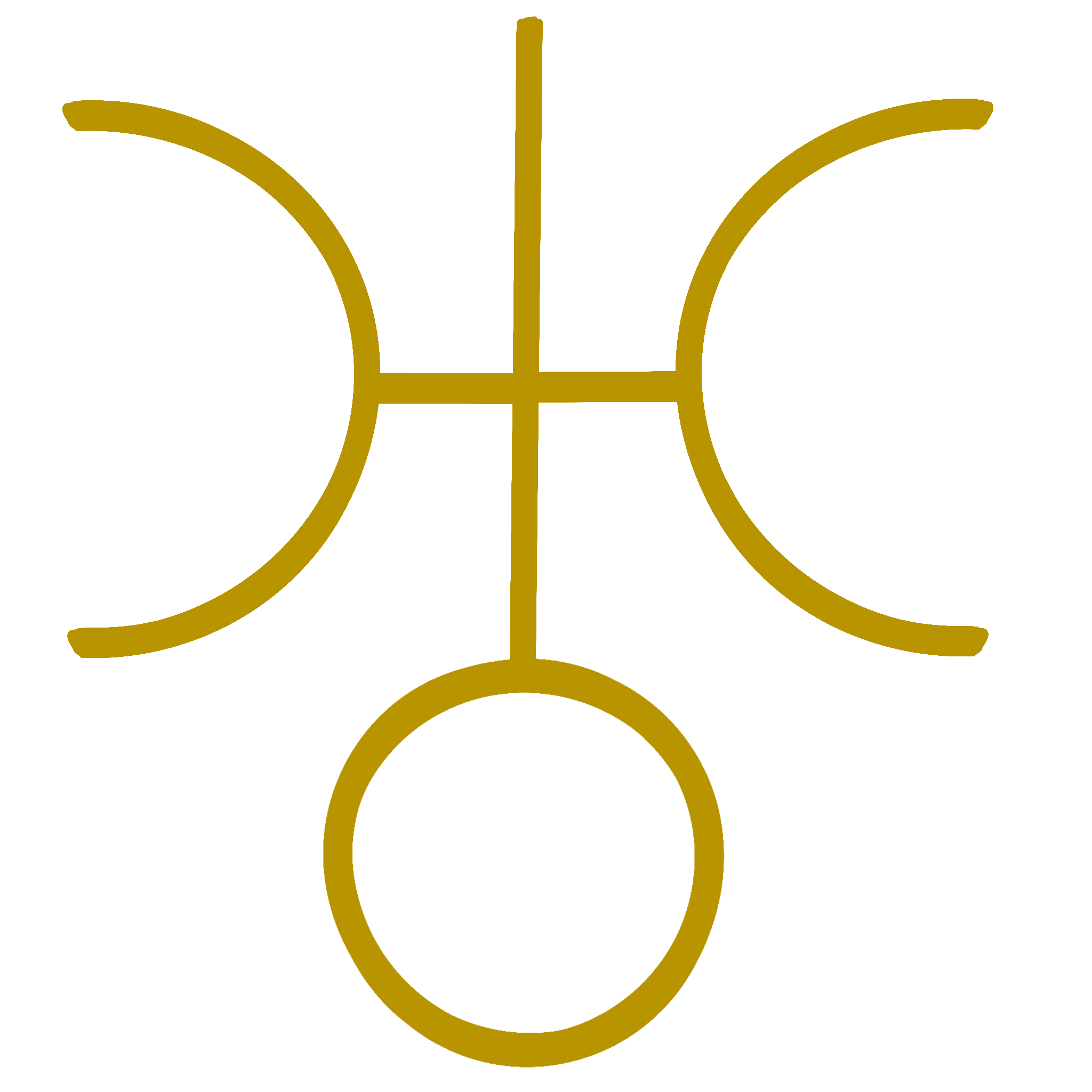
Symbolism
Uranus is a planet associated with sudden and fast-paced changes, uncertain events, unpredictability, and impulsiveness. It teaches us that the only constant in life is change. Wherever Uranus goes, disruption, progress, and liberation follow. It shows us where we can rise and make change happen, that there are alternatives to the ruling norm, that justice can be had, etc. Uranus is also connected to removing the shackles, so freedom and independence are associated with it.
In the not-so-positive aspect, Uranus rules catastrophes, tragedies, and bereavements as well. Perhaps it alludes to Pandora’s jar and the spread of plagues and misfortunes upon humankind as it was opened.
Uranus is also connected to innovations and technology, often things that use electricity, since Uranus is associated with that. Uranus can also signify natives who are ahead of their time in some area of life, perhaps in how they live, the relationships they choose to have, the work they do, how they perceive the world, etc.
Uranus also signifies unconventionality, like unconventional jobs, non-normative relationships and structures, and things that seem out of the ordinary or “going against the stream”. Eccentricity is another signification.
Richard Tarnas summarizes Uranus’s correspondences and archetype in the following way in Cosmos and Psyche:
“Since at least the turn of the twentieth century, the unanimous consensus among astrologers is that the planet Uranus is empirically associated with the principle of change, rebellion, freedom, liberation, reform and revolution, and the unexpected breakup of structures; with sudden surprises, revelations and awakenings, lightning-like flashes of insight, the acceleration of thoughts and events; with births and new beginnings of all kinds; and with intellectual brilliance, cultural innovation, technological invention, experiment, creativity, and originality. In addition to the occurrence of sudden breakthroughs and liberating events, Uranus transits are linked to unpredictable and disruptive changes; hence the planet is often referred to as the ‘cosmic trickster.’ Another set of themes associated with Uranus is a concern with the celestial and the cosmic, with astronomy and astrology, with science and esoteric knowledge, and with space travel and aviation. With respect to personal character, Uranus is regarded as signifying the rebel and the innovator, the awakener, the individualist, the dissident, the eccentric, the restless and wayward. These various qualities are considered to be so pronounced in persons born with a prominent Uranus and expressed so conspicuously in a person‘s life during Uranus transits that there seems to have been no significant disagreement among astrological authorities, for at least the past century that these characteristics reflect the archetypal nature of the planet Uranus.” (Tarnas, 2006, ch. 3).
As with Neptune and Pluto, there was also a range of historical and cultural phenomena that coincided with the discovery of Uranus that have become a part of its significance. As Tarnas writes:
“More recent astrological sources suggested that the historical period of the planet’s discovery in the late eighteenth century was relevant to its archetypal meaning, reasoning that the discovery of the physical planet in some sense represented an emergence of the planet’s corresponding archetype into the conscious awareness of the collective psyche. In this regard the parallels with Uranus’s astrological meaning were certainly clear: The planet’s discovery in 1781 occurred at the culmination of the Enlightenment, in the extraordinary era that brought forth the American and French Revolutions, the Industrial Revolution, and the beginning of Romanticism. In all these coinciding historical phenomena, the figure of Prometheus is of course readily evident as well: the championing of human freedom and individual self-determination, the challenge to traditional beliefs and customs, the fervent revolt against royalty and aristocracy, established religion, social privilege, and political oppression; the Declaration of Independence and the Declaration of the Rights of Man, liberté and egalité; the beginnings of feminism, the widespread interest in radical ideas, the rapidity of change, the embrace of novelty, the celebration of human progress, the many inventions and technological advances, the revolutions in art and literature, the exaltation of the free human imagination and creative will, the plethora of geniuses and culture heroes. Here too were the Romantic poets with their great paeans to Prometheus himself. If the age of Uranus’s discovery is to be given an archetypal characterization, none seems more appropriate than ‘Prometheus Unbound.’” (Tarnas, 2006, ch. 3).
Wherever Uranus is in a chart, it’s “where we can tend to play the rebel, establishing an independence style that sets us apart from everyone else and lifts us above the ordinary. […] You are unlikely to play by the rules where this planet is in your chart. Here we can break down barriers and borders, breathe new life into old traditions, and courageously break convention to bring about social, political, or personal change.” (Taylor, 2018, p. 79).
Neptune
Fast Facts
Keywords: Cloudiness, unreality, idealism, sacrifice, dreams and fantasies, imagination, escape, psychic sensitivity, spiritualism, a desire to transcend, a longing for bliss, compassion, romance, unconditional love, empathy
Domicile: Pisces (in modern astrology)
Detriment: Virgo (in modern astrology)
Anatomy: Feet, pineal gland, spinal column, nervous system
Colors: Sea green, dull grey to black
Metal: Neptunium and silver
Stones: Rock crystal and opal
Discovered in 1846
Neptune spends approximately fourteen years in each sign
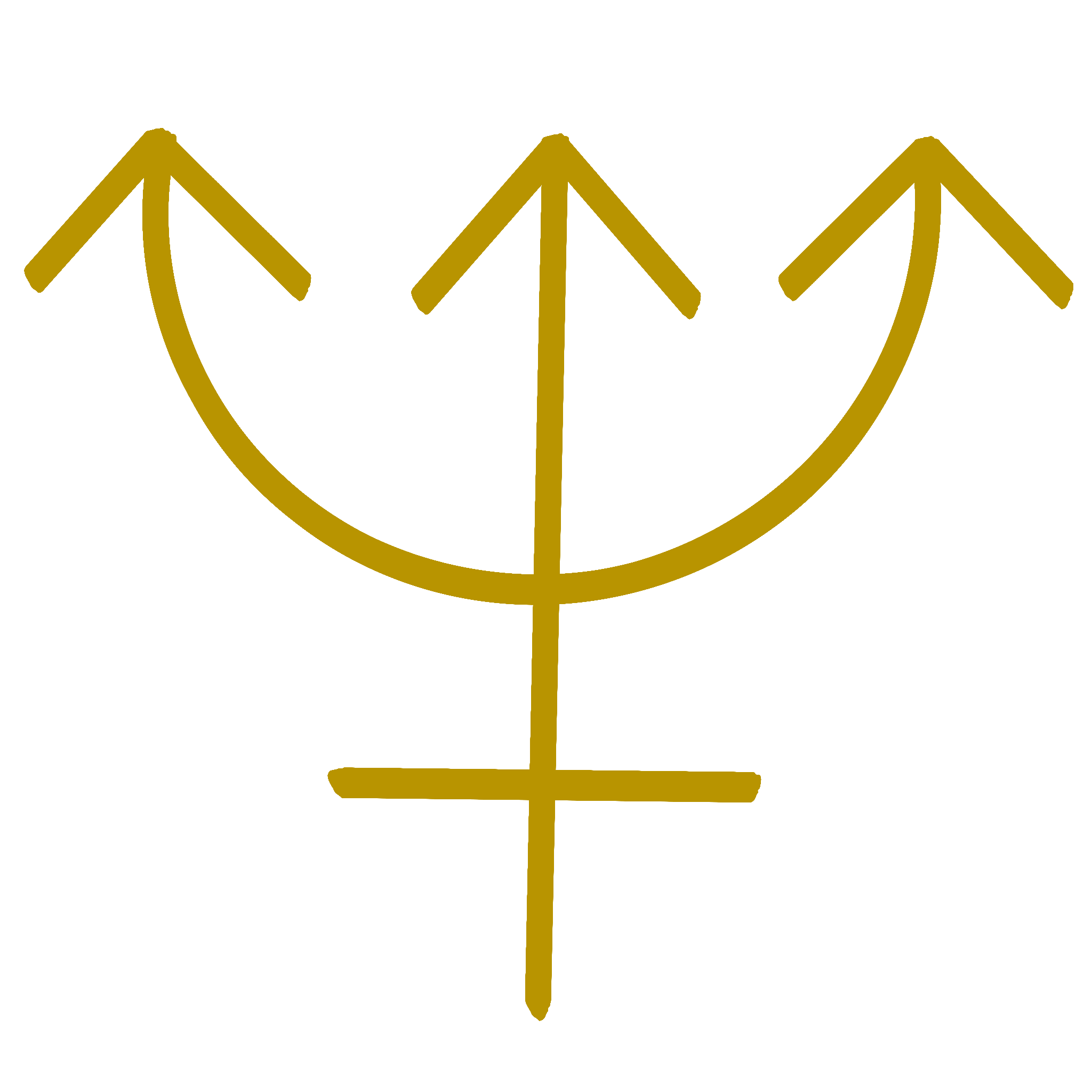
Symbolism
Neptune is connected to the transcendental, otherworldly, spiritual, mystical, and dreamy. While Jupiter is connected to belief, Neptune is closer to faith. Neptune can also have a desire to experience something transcendent, like experiencing or creating transcendental beauty through art.
Due to Neptune's dreamy nature, it also signifies the shadow side of escapism and illusions. Becoming addicted to escapism is also associated with Neptune, as addiction is also a part of Neptune and can be a part of the otherworldly, transcendental experiences or something that takes us out of our current reality, which is also connected to Neptune.
Neptune is also connected to idealism. It can be the idealistic standards we set in certain areas of our lives, as well as the unwillingness or incapability of seeing the reality of certain situations and/or relationships. Neptune is often described as being foggy or murky, so the incapability of seeing things for what they are can be an issue. Confusion and deception are also connected to Neptune, perhaps due to its foggy quality.
Neptune is also connected to eroding boundaries and, in that way, a desire to merge.
Richard Tarnas summarizes Neptune’s correspondences and archetype in the following way in Cosmos and Psyche:
“Neptune is associated with the transcendent, spiritual, ideal, symbolic, and imaginative dimensions of life; with the subtle, formless, intangible, and invisible; with the unitive, timeless, immaterial, and infinite; with all that which transcends the limited literal temporal and material world of concretely empirical reality: myth and religion, art and inspiration, ideals and aspirations, images and reflections, symbols and metaphors, dreams and visions, mysticism, religious devotion, universal compassion. It is associated with the impulse to surrender separative existence and egoic control, to dissolve boundaries and structures in favor of underlying unities and undifferentiated wholes, merging that which was separate, healing and wholeness; the dissolution of ego boundaries and reality structures, states of psychological fusion and intimations of intrauterine existence, melted ecstasy, mystical union, and primary narcissism; with tendencies towards illusion and delusion, deception and self-deception, escapism, intoxication, psychosis, perceptual and cognitive distortions, conflation and confusion, projection, fantasy; with the bedazzlement of consciousness whether by gods, archetypes, beliefs, dreams, ideals, or ideologies; with enchantment, in both positive and negative senses.” (Tarnas, 2006, ch. 3).
He goes on to write that:
“The archetypal principle linked to Neptune governs all nonordinary states of consciousness as well as the stream of consciousness and the oceanic depths of the unconscious. Characteristic metaphors for its domain include the infinite sea of the imagination, the ocean of divine consciousness, and the archetypal wellspring of life. It is in a sense the archetype of the archetypal dimension itself, the anima mundi, the Gnostic pleroma, the Platonic realm of transcendent Ideas, the domain of the gods, the Immortals. In mythic and religious terms, it is associated with the all-encompassing womb of the Goddess and with all deities of mystical union, universal love, and transcendent beauty; the mystical Christ, the all-compassionate Buddha, the Atman-Brahman union, the union of Shiva and Shakti, the hieros gamos or sacred marriage, the coniunctio oppositorum; the dreaming Vishnu, maya and lila, the self-reflecting Narcissus, the divine absorbed in its own reflection; Orpheus, god of artistic inspiration, the Muses; the cosmic Sophia whose spiritual beauty and wisdom pervade all.” (Tarnas, 2006, ch. 3).
As with Uranus and Pluto, there was also a range of historical and cultural phenomena that coincided with the discovery of Neptune that have become a part of its significance. As Tarnas writes:
“These include the rapid spread of spiritualism throughout the world beginning in the late 1840s, the upsurge of utopian social ideologies at the same time, the rise of universalist and communitarian aspirations in both secular and religious movements, the full ascendancy of Idealist and Romantic philosophies of spirit and the imagination, the widespread cultural influence of Transcendentalism, the new popular interest in both Eastern mystical and Western esoteric traditions, and the emergence of theosophy. Here too could be cited the rise of the recreational use of psychoactive drugs in European bohemian circles, the beginning of the chemical and pharmaceutical industries, and the invention of anesthetics. The invention and cultural impact of photography and the early experiments in motion pictures, as well as the new aesthetic spirit of Impressionism and Post-Impressionism, were characteristic of the Neptune archetype in its association with image, reflection, subjectivity, illusion, and multiple realities. The growing focus on the unconscious, dreams, myths, hypnosis, and non-ordinary states of consciousness in the decades after Neptune’s discovery is also suggestive of the archetype. So also was the distinct collective emergence of a more socially compassionate humanitarian sensibility that was expressed in the public attitudes, social legislation, art and literature of the Victorian era and the nineteenth century generally (the novels of Dickens and Stowe, Tolstoy and Dostoevsky, the abolition of slavery and serfdom, the movements and the laws to limit child labor and other cruelties of industrial capitalism, the first laws abolishing capital punishment, the wave of founding of societies for the protection of animals, the growing role of women in shaping social policy, the beginning of modern nursing through the work of Florence Nightingale, the spread of care for the sick and wounded in war, the first Geneva Convention, the founding of the International Red Cross, etc.).” (Tarnas, 2006, ch. 3).
Wherever we have Neptune in our chart, “we willingly offer ourselves in a spirit of charitable service. Devotion can evoke acts of genuine selflessness, or indeed, occasionally manifested as a form of martyrdom.” (Taylor, 2018, p. 81).
Pluto
Fast Facts
Keywords: Elimination, eruptive change, crisis, survival, cycles of birth, death and rebirth, regeneration, transformation, metamorphosis, taboos and secrets, hidden things, power, dictatorship, control, obsession
Domicile: Scorpio (in modern astrology)
Detriment: Taurus (in modern astrology)
Anatomy: Elimination and reproductive systems, abnormal, gross, pituitary gland
Colors: Maroon, dark red, and brown
Metal: Plutonium and iron
Stones: Diamond, bloodstone, and agate
Discovered in 1929.
Pluto spends on average between fourteen and thirty years in each sign due to its elliptical orbit around the Sun
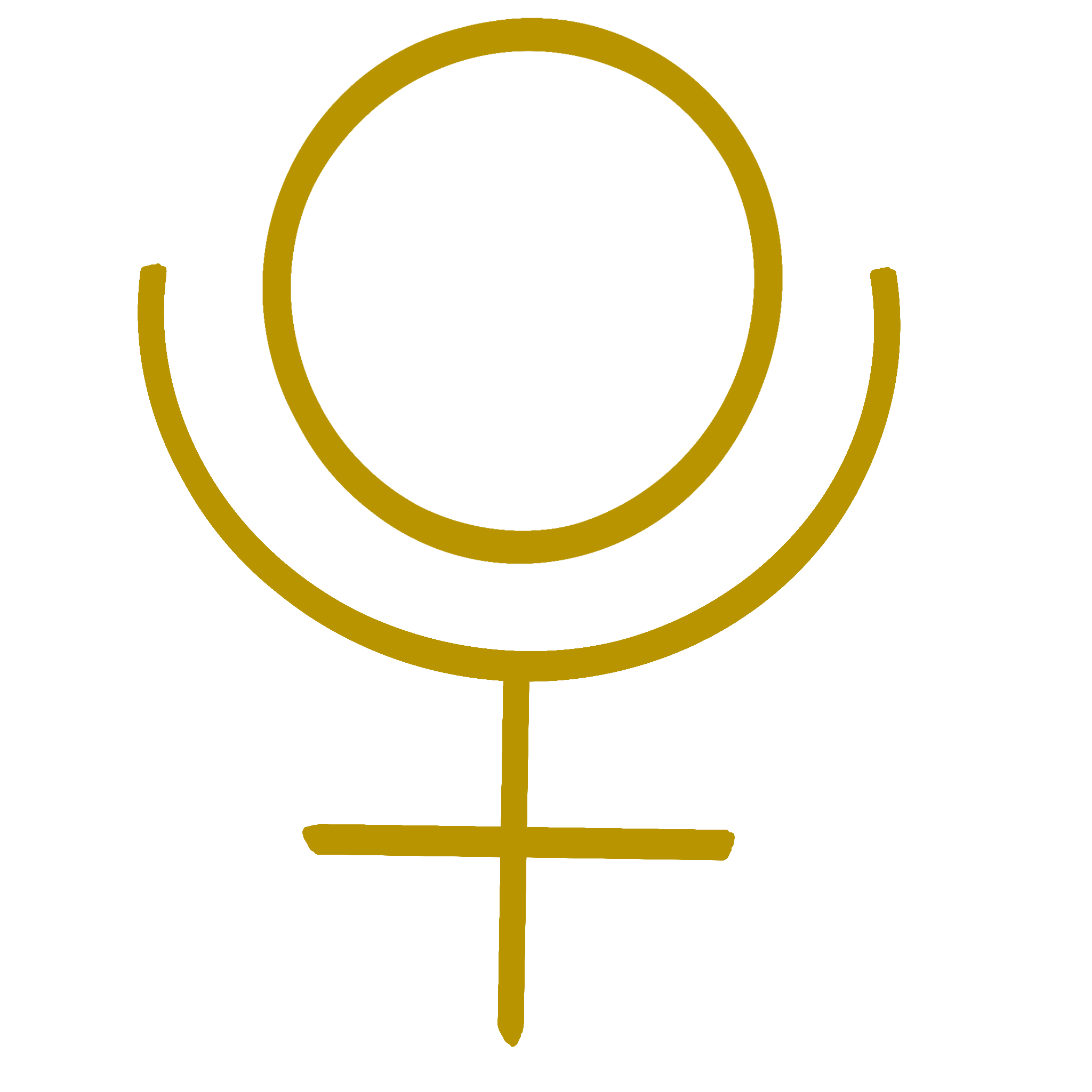
Symbolism
Pluto is often connected to the death-rebirth cycles, transformation, and regeneration. In that way, it’s also connected to breaking down structures and creating new ones in their place.
Pluto is also connected to power, a desire to understand and influence the masses, as well as to the collective consciousness. Pluto also rules the subconscious, the more “underworldly” ideas and beliefs we might have difficulty accessing. Some of these can be shadow sides of our psyche.
Pluto is also associated with pleasure, sex, obsession, and things that are deemed taboo.
Pluto intensifies and empowers whatever it touches during transits and through aspects.
Richard Tarnas summarizes Pluto’s correspondences and archetype in the following way in Cosmos and Psyche:
“Pluto is associated with the principle of elemental power, depth, and intensity; with that which compels, empowers, and intensifies whatever it touches, sometimes to overwhelming and catastrophic extremes; with the primordial instincts, libidinal and aggressive, destructive and regenerative, volcanic and cathartic, eliminative, transformative, ever-evolving; with the biological processes of birth, sex, and death, the cycle of death and rebirth; with upheaval, breakdown, decay, and fertilization; violent purgatorial discharge of pent-up energies, purifying fire; situations of life-and-death extremes, power struggles, all that is titanic, potent, and massive. Pluto represents the underworld and underground in all senses: elemental, geological, instinctual, political, social, sexual, urban, criminal, mythological, demonic. It is the dark, mysterious, taboo, and often terrifying reality that lurks beneath the surface of things, beneath the ego, societal conventions, and the veneer of civilization, beneath the surface of the Earth, that is periodically unleashed with destructive and transformative force. Pluto impels, burns, consumes, transfigures, resurrects. In mythic and religious terms, it is associated with all myths of descent and transformation, and with all deities of destruction and regeneration, death and rebirth: Dionysus, Hades and Persephone, Pan, Medusa, Lilith, Inanna, Isis and Osiris, the volcano goddess Pele, Quetzalcoatl, the Sepent power, Kundalini, Shiva, Kali, Shakti.” (Tarnas, 2006, ch. 3).
As with Uranus and Neptune, there was also a range of historical and cultural phenomena that coincided with the discovery of Pluto that have become a part of its significance. As Tarnas writes:
“With respect to Pluto’s discovery, the synchronistic phenomena in the decades immediately surrounding 1930, and more generally in the twentieth century, include the splitting of the atom and the unleashing of nuclear power; the titanic technological empowerment of modern industrial civilization and military force; the rise of fascism and other mass movements; the widespread cultural influence of evolutionary theory and psychoanalysis with their focus on the biological instincts; increased sexual and erotic expression in social mores and the arts; intensified activity and public awareness of the criminal underworld; and a tangible intensification of instinctually driven mass violence and catastrophic historical developments, evident in the world wars, the holocaust, and the threat of nuclear annihilation and ecological devastation. Here also can be mentioned the intensified politicization and power struggles characteristic of twentieth-century life, the development of powerful forms of depth-psychological transformation and catharsis, and the scientific recognition of the entire cosmos as a vast evolutionary phenomenon from the primordial fireball to the still-evolving present.” (Tarnas, 2006, ch. 3).
Wherever Pluto is in our chart, it indicates “where we can become powerful, although it can also be a place where at times we feel disempowered, invisible, or persecuted. At the end of the tunnel, though, is the light of regeneration” (Taylor, 2018, p. 83).
Zodiac Signs
If I continue with April Elliott Kent’s way to describe the planets, signs, houses, and aspects of astrology by using the metaphor of a play, where the planets would be the actors, the signs represent the characters’ costumes and personalities (Kent, 2023, p. 4-5).
In other words, now that we have reached the signs, we are looking at the characters’ costumes and personalities.
Aries
Fast Facts
Keywords: Assertive, decisive, urgent, forthright, confident, courageous, impulsive, impatient, selfish, impetuous, childlike, fast and furious
Triplicity (Element): Fire
Quadruplicity (Modality): Cardinal
Polarity: Diurnal, Positive, Yang
Quality: Hot and Dry
Traditional Ruler: Mars
Parts of the Body: Head, face, and adrenal glands
Since Aries is the first Fire sign of the year, and a Cardinal sign that starts off the season, it needs that initial friction and charge to get the fire started. “Aries symbolizes the very first spark of creation” (Gillett, 2012, p. 61). However, it’s a fire that can’t be contained or sustained for very long, since Aries is ruled by Mars, which is a very fiery, acute, and often aggressive planet, but also fast-paced.
As opposed to Leo, whose fire burns longer, and Sagittarius, whose fire can burn everywhere all at once, Aries' fire is the initial spark; it’s fast, urgent, and spontaneous.
“As the first sign of the zodiac, Aries is strong and vital, reflecting the vigour of its totem animal, the ram. Positive cardinal fire is extravert, initiatory, and ardent, focusing its energies to get things going. Aries needs action.” (Taylor, 2018, p. 32).
Aries is a sign that acts before it thinks. It strikes before the opportunity passes. There’s an inherent instinctive quality to Aries (and all the Fire signs) to act whenever they see an opportunity. They don’t have to think or analyse the situation before taking action; they just act.
Aries is also an independent sign that likes to do things on their own at their own pace, which is impulsive and fast. “Aries people learn to cultivate the independence and courage that allow them to thrive on insecurity, and on the thrilling terror of new experiences. Consequently, Aries natives are fiercely independent, courageous leaders, and alive with pioneer spirit.” (Kent, 2023, p. 48).
Those with the Sun here are leaders. These folks have a life purpose that’s about pioneering and breaking new ground. With other planets in Aries, these planets “will act spontaneously, with daring - you like to take the initiative in whatever aspects of your life these planets represent.” (Taylor, 2018, p. 32).
Strengths: Adventurous, energetic, pioneering, courageous, enthusiastic, confident, dynamic, quick-witted, assertive, determined, a pioneering spirit
Challenges: Selfish, quick-tempered and aggressive, brutal, impulsive, hard-headed, impatient, unreliable, foolhardy, a daredevil
Taurus
Fast Facts
Keywords: Possessive, permanent, patient, reliable, warm-hearted, determined, jealous, possessive, inflexible, slow and steady, realistic
Triplicity (Element): Earth
Quadruplicity (Modality): Fixed
Polarity: Nocturnal, Negative, Yin
Quality: Cold and Dry
Traditional Ruler: Venus
Parts of the Body: Neck, throat, vocal cords, and thyroid gland
Taurus takes their time. It’s associated with qualities like reliability, sustainability, slow and steady building, and endurance. Taurus doesn’t like change, as they appreciate comfort more. “Taureans are attuned to physical reality and the rhythms of nature and the body.” (Taylor, 2018, p. 34). When they’ve uncovered something they like or enjoy (like certain foods, creative modalities, etc.), they come back to that again and again. “Food, shelter, and clothing are Taurus’s main concern, as well as physical health and fully functioning senses with which to enjoy it all.” (Kent, 2023, p. 60).
Taurus is a great sign to create things in the real world, to create something tangible. “Taurus epitomizes the rich beauty, fullness and strength of the material world. [...] In Taurus we stop, take stock, consolidate and create something of real and lasting beauty.” (Gillett, 2012, p. 67).
Taurus also has the quality of elevating their taste and admiring things that are of value and quality to them. It’s also a sensory sign that likes and is attracted to sight, smell, sound, taste, and touch.
Taurus is also a very loyal and enduring sign.
Strong placements here, especially the Sun, give these folks a life purpose to build something valuable that will last. This will “allow you to develop gifts of persistence and resilience.” (Taylor, 2018, p. 34). With other strong planets in this sign, the planets “are both grounded and sensuous in their expression, channeled through the physical body.” (Taylor, 2018, p. 34). Strong Taurus placements can also indicate great artists who keep refining their own craft over a long period of time.
Strengths: Patient, reliable, stable, warm-hearted, loving, persistent, determined, placid, sensible, security-loving, sensuous, practical, relaxed
Challenges: Jealous, possessive, resentful, inflexible, stubborn, self-indulgent, greedy, close-minded, slow, bigoted, resistant to change
Gemini
Fast Facts
Keywords: Adaptable, versatile, communicative, intelligent, witty, nervy, restless, tense, superficial, social butterfly
Triplicity (Element): Air
Quadruplicity (Modality): Mutable
Polarity: Diurnal, Positive, Yang
Quality: Hot and Moist
Traditional Ruler: Mercury
Parts of the Body: Arms, hands, shoulders, lungs, and nervous system
Gemini is depicted by the twins, so there is an inherent split to this sign. “Gemini is concerned with duality and movement between opposing sides, providing a bridge between the two.” (Taylor, 2018, p. 36).
It’s also the sign of communication, as its ruler is Mercury. “Gemini rules communication—the skills of encoding and decoding messages, of understanding our world and making ourselves understood.” (Kent, 2023, p. 72).
Communication paired with the inherent duality of Gemini, the sign is associated with a back-and-forth style of communication, whether internal, external, or both. And since Gemini is Mutable Air, it can go everywhere all at once when it comes to communication. Gemini “is sociable and outgoing, light and playful, but easily bored and needing variety and stimulation for a curious, agile mind.” (Taylor, 2018, p. 36).
Because of Gemini’s duplicity (being split into two; the twins), and the desire to do everything all at once, it can manifest in working on several projects at once or having several jobs or careers at the same time, etc. “Gemini’s flexible intelligence is naturally inclined to say yes. The excited spontaneity of the sign can make almost anything seem possible.” (Gillett, 2012, p. 73). There’s an inherent desire to have multiplicity, but it would also be wise to narrow down the priorities to keep focus on the things that matter.
Since Gemini’s ruler is Mercury, and Mercury has a trickster energy to it in terms of its speed and stationing retrograde approximately every three months (and lasting for three weeks), Gemini also has some of that forward-backward, fast-slow, mutable, and dual quality to it.
Strong planetary placements here, especially the Sun, will give a Gemini the life purpose of finding the “twin”. “Every Gemini has light and dark sides and it is your task to recognize both characters within yourself.” (Taylor, 2018, p. 36). With other planets in Gemini, they “tend to adapt themselves easily to new environments and situations. Here you will need to express yourself with lightness and variety.” (Taylor, 2018, p. 36).
Strengths: Adaptable, versatile, communicative, quick-witted, intellectual, curious and inquisitive, eloquent, useful, lively, social butterfly, inventive, clever
Challenges: Nervy, tense, restless, superficial, inconsistent, cunning, verbally cruel, deceptive, disloyal, preoccupied, doesn’t follow through
Cancer
Fast Facts
Keywords: Protective, sensitive, moody, loving, intuitive, touchy, unable to let go, careful
Triplicity (Element): Water
Quadruplicity (Modality): Cardinal
Polarity: Nocturnal, Negative, Yin
Quality: Cold and Moist
Traditional Ruler: The Moon
Parts of the Body: Chest, breasts, and stomach
Cancer is a sensitive sign. “As its animal symbol suggests, a hard shell protects a vulnerable interior.” (Taylor, 2018, p. 38). Due to this, the sign of Cancer has an internal need to protect the self and the family (who is also important to Cancerians) from outside threats. If challenged in an argument, you will find a remarkable self-defense system spring into action. This may also show up as lashing out when they feel threatened or are put under stress. This is a defense mechanism when they are in a state of worry or anxiety.
Cancer is also associated with a strong and vivid imagination. However, when unchecked, anxious emotions are combined with the imagination, it can result in a deep, continual worry and anxiety, especially when loved ones are concerned. Worry is a common trait of Cancer.
Since Cancer is ruled by the Moon, this sign has an inherent reflective depth that makes these folks deeply empathic and understanding. Due to their connection with the Moon, there is also a natural nurturing ability about these folks.
Every year, when the Sun moves through Cancer, it calls for a moment of reflection. “Who we are is a construction of the family, culture, and moment in history into which we’re born. But there’s also a core element that makes you uniquely you. It’s the job of Cancer to locate that inner compass point.” (Kent, 2023, p. 84).
Cancerians have a need for security and the familiar. They “would rather be at home (or at least surrounded by loved ones) than visit the most exotic locations on earth. Familiar objects, food, and landmarks comfort you and make you feel safe.” (Kent, 2023, p. 84).
With strong planetary placements here, especially the Sun, these folks’ life purpose “is to find your tribe and to develop a central role as the caregiver with it, your life revolving around some form of family (whether personal or professional)” (Taylor, 2018, p. 38). With other planets here, they “will show a self-protective quality, acting according to moods and feelings. Intuition and emotion are the ruling forces” (Taylor, 2018, p. 38).
Strengths: Emotional, loving, intuitive, imaginative, shrewd, cautious, protective, family-oriented, nurturing, domestic, maternal, sympathetic
Challenges: Changeable, moody, overemotional, touchy, oversensitive, clingy, unable to let go, negative, manipulative, overly cautious, insecure, anxious
Leo
Fast Facts
Keywords: Generous, warm-hearted, creative, enthusiastic, impressive, powerful, moody, proud, pompous, patronizing, bossy
Triplicity (Element): Fire
Quadruplicity (Modality): Fixed
Polarity: Diurnal, Positive, Yang
Quality: Hot and Dry
Traditional Ruler: The Sun
Parts of the Body: Heart, spine, back, and sensory nerves
Leos have a powerful creative urge. Often, that positions them as leaders. Leo is also ruled by the Sun. Since the Sun is the center of our solar system, Leos are often at the center of attention. Everything else revolves around them, for better and worse. There is an inherent need to be seen in Leos, again, for better and worse. When they are broad-minded and generous, it’s for the best, while if they become too egocentric, it’s for the worst.
Just like the Sun gives us warmth here on Earth, Leos can also be radiant and warm-hearted. They can be generous with their time and energy, and their enthusiastic nature can easily be transferred to others and motivate them.
When these folks set their sights on a goal, “you pursue it steadily, even doggedly, until you’ve reached it. Leo’s constancy and organizational savvy regularly take the uninitiated by surprise. Beneath Leo’s surface razzle-dazzle is, in fact, a steady friend in need, a loyal employee, and a devoted partner.” (Kent, 2023, p. 52).
With strong planetary positions here, especially the Sun, the life purpose of Leos “is to develop your creative brilliance and take center stage or lead the pack. You attract allegiance in return for your inspiration, support, and strength.” (Taylor, 2018, p. 40). With other planets here, they “will act with courage, pride, and a sense of showmanship. These planets radiate star quality, attracting praise from others.” (Taylor, 2018, p. 40).
Strengths: Generous, warm-hearted, creative, enthusiastic, broad-minded, expansive, faithful and loyal, loving, regal, magnetic, inspiring, a performer
Challenges: Pompous, patronizing, bossy, egotistic, interfering, dogmatic, intolerant, overdramatic, vain, domineering, insecure, attention-seeking
Virgo
Fast Facts
Keywords: Modest, shy, meticulous, reliable, a warrior, over-critical, precise, detail-oriented
Triplicity (Element): Earth
Quadruplicity (Modality): Mutable
Polarity: Nocturnal, Negative, Yin
Quality: Cold and Dry
Traditional Ruler: Mercury
Parts of the Body: Digestive system, spleen, joints, and nervous system
Virgo is always willing to help. They are humble and down to earth. Since Virgo is ruled by Mercury, these folks have a knack for focusing on details, analyzing them, managing and categorizing the information, and putting it to use.
On the other hand, “Virgo’s powers of discrimination and knack for analysis have earned it a reputation for being critical and impossible to please” (Kent, 2023, p. 63). However, since Virgo rules the harvest season, Virgoans need to harvest so that the rest of the world can get fed. That is a heavy responsibility to bear, but the Virgo handles it with their meticulous and diligent skills, and uses their analytical abilities to make sure the harvest is being used in a good way and handed off to Libra, who can distribute it fairly.
Virgos bring “order and efficient functioning. Negative mutable earth suggests an ability to do what is necessary without fanfare” (Taylor, 2018, p. 42). However, I would suggest you actually thank your near and dear Virgos for everything they do, not only to avoid the passive-aggressive washing of your clothes or unloading of the dishwasher (since you can’t seem to take care of your own shit, lol) but also because of everything they do in the background that makes your life run smoothly.
When important planetary placements are in Virgo, especially the Sun, “your life purpose is to hone your chosen craft. You feel happiest being useful as part of a team or taking a constructive role in the world” (Taylor, 2018, p. 42). When there are other planets in this sign, they “will act with discrimination. This sign is not given to drama or show, but focuses on useful efficiency and the development of practical skills.” (Taylor, 2018, p. 42), since honing a skill or craft is central to Virgo as well.
Strengths: Modest, meticulous, reliable, practical, diligent, intelligent, analytical, discriminating, thorough, scientific
Challenges: Fussy, picky, overcritical, harsh, a perfectionist, conservative, self-centered, a hypochondriac, gloomy, pedantic
Libra
Fast Facts
Keywords: Diplomatic, romantic, charming, harmonious, adaptive, indecisive, changeable, self-indulgent
Triplicity (Element): Air
Quadruplicity (Modality): Cardinal
Polarity: Diurnal, Positive, Yang
Quality: Hot and Moist
Traditional Ruler: Venus
Parts of the Body: Kidneys
The scales are Libra’s symbol, representing the sign’s “function of creating peaceful equilibrium and perfect balance.” (Taylor, 2018, p. 47). In ancient Egypt, Anubis used the scales to weigh the souls of the dead against a feather of truth to determine their afterlife fate. As Libra is the sign before Scorpio, which is a sign that has come to be associated with death and rebirth, the scales are fitting (Kent, 2023, p. 75). While Libra is fair and diplomatic, the sign also has an indecisive quality. Trying to see things from all perspectives or all sides of the story, to be as fair as possible, can lead to stagnation.
Because of their inherent sociable nature, Librans have a hard time dealing with loneliness, more so than any other sign. They need functioning relationships in their lives, especially if they have a tendency to be lazy and indecisive. The presence of a partner can motivate Librans to be more action-oriented and decisive.
Since Libra is ruled by Venus, this sign has a strong association with everything beautiful––in particular, any kind of art. Strong placements here can indicate artists, musicians, designers, and others who create beauty in the world.
When strong planetary placements are in Libra, especially the Sun, “your life purpose is to personify and promote the art of civilized living. You find inner balance through developing poise and grace within yourself” (Taylor, 2018, p. 46). When there are other planets in this sign, they “will express themselves with polite refinement, seeking to create an atmosphere of harmony and acting with consideration for others.” (Taylor, 2018, p. 46).
Strengths: Diplomatic, romantic, charming, easy-going, sociable, idealistic, just, peace-loving, harmonious, considerate, honest, artistic
Challenges: Indecisive, changeable, gullible, easily influenced, self-indulgent, complacent, inactive, fickle, over accommodating, argumentative, insincere
Scorpio
Fast Facts
Keywords: Determined, forceful, passionate, intense, jealous, vindictive, fearless
Triplicity (Element): Water
Quadruplicity (Modality): Fixed
Polarity: Nocturnal, Negative, Yin
Quality: Cold and Moist
Traditional Ruler: Mars
Modern Ruler: Pluto
Parts of the Body: Reproductive organs, sexual organs, excretory system
In traditional astrology, Scorpio is ruled by Mars, the planet of conflict, aggression, and war. Unsurprisingly, then, Scorpios can have some edges to them, even though they’re not always visible or apparent. Additionally, just as a scorpion has a quick tail and sharp sting, the Scorpio can strike back when you least expect it.
With their modern ruler, Pluto, the planet named after the god of the underworld, death has also become connected to Scorpio. And while death might be a difficult and uncomfortable topic to talk about, “Scorpio understands that life and death are two sides of the same coin, as incomplete without one another as day is incomplete without night. […] Of all the signs, Scorpio grasps that without the knowledge of death, life loses its urgency and its value.” (Kent, 2023, p. 87). Because of this, and because Scorpio is associated with other taboo topics–like sexuality, obsession, and the occult, to name a few–Scorpio has a reputation for diving deeper into the dark, perhaps forbidden, experiences and parts of life. Scorpios often feel comfortable in experiences that most others would avoid.
In other words: “This is a complex and intense sign, concerned with processes of transformation. Negative fixed water is inward-moving and conjures the image of ‘still waters running deep’” (Taylor, 2018, p. 48).
When strong planetary placements are in Scorpio, especially the Sun, “your life purpose is to develop resilience. There is often a story of survival against the odds, and your ‘solar gold’ is the inner fortitude this brings” (Taylor, 2018, p. 48). When there are other planets in this sign, they “will act with passion, intensity, and stoic courage, capable of going into the fire and being reborn in purer and stronger form.” (Taylor, 2018, p. 48).
Strengths: Determined, forceful, emotional, intuitive, powerful, passionate, exciting, magnetic, perceptive, brave and fearless, probing, investigative, insightful, empathetic
Challenges: Jealous, resentful, compulsive, obsessive, secretive, obstinate, vindictive, suspicious, sarcastic, manipulative
Sagittarius
Fast Facts
Keywords: Optimistic, freedom-loving, philosophical, adventurous, good-humored, careless, irresponsible, visionary, impatient
Triplicity (Element): Fire
Quadruplicity (Modality): Mutable
Polarity: Diurnal, Positive, Yang
Quality: Hot and Dry
Traditional Ruler: Jupiter
Parts of the Body: Hips, thighs, and liver
Sagittarius, like other fire signs, has an initiating energy. While challenge is an important factor in the life of a Sagittarius, at least for it to feel like a fulfilling life, they begin to work on the next thing as soon as the previous thing is achieved or accomplished.
Like Gemini, Sagittarius is also a dual sign. Half human and half horse, Sagittarius tends to move quickly. The centaur form of Sagittarius also suggests a love for both the earthly experiences of wild nature and the more air-like qualities of contemplation and philosophy. Their philosophical nature can also be connected to their desire for a deeper understanding. “Sagittarius seeks not just the truth […] but also an understanding of the truth. Sagittarius naturally looks for meaning—pictures in clouds and in Rorschach tests, a philosophy of life in sacred texts and the earth’s natural order.” (Kent, 2023, p. 55).
The image of the centaur, especially the half-horse side, connotes the Sagittarian need for adventure and long-distance travel, as wild horses graze large areas and travel long distances daily. Sagittarius “is the sign of the traveler and the gypsy, for whom the whole wild world is home. Positive mutable fire is sociable and restless, needing movement and a broad canvas.” (Taylor, 2018, p. 50).
When strong planetary placements are in Sagittarius, especially the Sun, “your life purpose is to explore, discover, and set yourself free on adventures.” (Taylor, 2018, p. 50). When there are other planets in this sign, they “will radiate fiery confidence, taking a long-range approach and needing breadth and freedom. Any form of confinement would be counterproductive.” (Taylor, 2018, p. 50).
Strengths: Optimistic, freedom-loving, adventurous, active, jovial, good-humored, honest, straightforward, intellectual, philosophical, scholarly, funny, a traveler and explorer
Challenges: Blindly optimistic, careless, irresponsible, superficial, tackles, restless, crude, blunt, arrogant, know-it-all, superior, intolerant, impatient
Capricorn
Fast Facts
Keywords: Practical, useful, responsible, prudent, ambitious, disciplined, pessimistic, over-conventional, rigid, controlling
Triplicity (Element): Earth
Quadruplicity (Modality): Cardinal
Polarity: Nocturnal, Negative, Yin
Quality: Cold and Dry
Traditional Ruler: Saturn
Parts of the Body: Knees, teeth, bones, joints, and skin
Capricorn is ruled by Saturn, which makes building something that will be solid and long-lasting an important goal in their life. Therefore, there is a great potential for success when you have strong planetary placements in Capricorn, though it may take quite some time to get there.
“Born when the midday Sun is at its lowest declination, Capricorn has a powerful urge to attain higher status. […] But achieving status is only part of what Capricorn is about. Capricorn is considered the paternal sign; her most noble path is to use its natural leadership ability and the authority she’s earned to shepherd others along a constructive path. Capricorn was born to be a role model.” (Kent, 2023, p. 68).
On the other hand, there is also a rigidity, inflexibility, and a serious quality about them that may choose to take a more arduous path towards the destination or solution because that’s the path they’ve always taken, when a simpler and less taxing path could’ve sufficed.
When strong planetary placements are in Capricorn, especially the Sun, “your life purpose is to develop self-reliance, taking on responsibility for both self and others. The path may feel lonely at times, but you always keep your eye on the goal.” (Taylor, 2018, p. 52). When there are other planets in this sign, they “will act with mature dignity, aware of tradition and what might be socially acceptable. You develop these gifts slowly over time.” (Taylor, 2018, p. 52).
Strengths: Practical, prudent, ambitious, disciplined, patient, careful, humorous, reserved, authoritative, traditional, pragmatic, hard-working, serious, mature, ethical
Challenges: Pessimistic, fatalistic, grudging, over-conventional, rigid, domineering, stubborn, unfeeling, judgmental, unforgiving
Aquarius
Fast Facts
Keywords: Friendly, humanitarian, honest, original, contrary, unpredictable, independent
Triplicity (Element): Air
Quadruplicity (Modality): Fixed
Polarity: Diurnal, Positive, Yang
Quality: Hot and Moist
Traditional Ruler: Saturn
Modern Ruler: Uranus
Parts of the Body: Shins, calves, and ankles

Being a sign that is ruled by two planets, Saturn (the traditional ruler) and Uranus (the modern ruler), it seems to make Aquarius a natural rule breaker. There is an acknowledgment of the rules (Saturn), but also a rebellious desire to break them (Uranus).
Interestingly, both Aquarius and Uranus are quite humanitarian as Aquarius tend to thrive in communities, while Uranus is the rebellious planet that wants to fight for minorities and the non-normative.
“Highly independent, Aquarius is also paradoxically a very sociable sign. Positive fixed air is outgoing, encouraging involvement in groups and the exchange of ideas. Aquarians often have strong social awareness and a humanitarian vision of a more ideal future along with the determination to bring this about.” (Taylor, 2018, p. 54).
When the Sun is in Aquarius, “your life purpose is to find your place within the group whilst at the same time asserting your own unique vision. An ideal of social equality may form an important foundation.” (Taylor, 2018, p. 54). When there are other planets in this sign, they “usually march to the beat of their own drum. Planets here tend to show a cool detachment in their expression.” (Taylor, 2018, p. 54).
Strengths: Friendly, humanitarian, honest, loyal, original, inventive, independent, intellectual, genius, rebellious, logical, scientific, progressive, humane
Challenges: Contrary, perverse, unpredictable, unemotional, detached, eccentric, temperamental, cold, opinionated, radical
Pisces
Fast Facts
Keywords: Imaginative, sensitive, compassionate, selfless, escapist, idealistic, secretive, deceitful
Triplicity (Element): Water
Quadruplicity (Modality): Mutable
Polarity: Nocturnal, Negative, Yin
Quality: Cold and Moist
Traditional Ruler: Jupiter
Modern Ruler: Neptune
Parts of the Body: Feet
The sign with the two fish swimming in opposite directions indicates a natural duality of wanting to merge with another, but also needing to escape. There’s an elusive quality here, too. You can’t really pin a Pisces down.
If out of balance, there can be a refusal to face reality for the Pisces. That’s when the toxic need for escape and to numb themselves can take over.
“As the last sign of the zodiac, Pisces symbolizes endings, illness and recuperation, imprisonment, and spiritual enlightenment. However, Jupiter, the king of the gods, was considering the ruling planet of Pisces before the discovery of Neptune, and Pisces people—like the tender saplings that take root during their season—are rarely as delicate as they seem.” (Kent, 2023, p. 91).
The task of Pisces “is to find freedom from material limitations and connect with the intangible and the magical, the divine source of life. Negative mutable water suggests focus on an internal world flowing according to feeling.” (Taylor, 2018, p. 56).
When strong planetary placements are in Pisces, especially the Sun, “your life purpose is to offer service to a higher principle, a journey that may involve the sacrifice of personal desires. Developing artistic imagination is a key dimension of your life.” (Taylor, 2018, p. 56). When there are other planets in this sign, they “tend to be unfocused in their expression, moved by subtle feelings rather than practical considerations, and lacking in boundary.” (Taylor, 2018, p. 56).
Strengths: Imaginative, sensitive, compassionate, kind, selfless, unworldly, intuitive, sympathetic, musical, artistic
Challenges: Escapist, idealistic, secretive, vague, weak-willed, easily led, impractical, timid, a procrastinator
Houses
There is a debate in the astrological community about house systems and which one is the best or “correct” one to use. Some house systems include whole houses (i.e., 30° houses), while others include unequal houses (i.e., can be less or more than 30°).
Here are a few different house systems (I won’t go into depth with them, but they will give you a small selection to look up if you’re interested):
Placidus: This is probably the most popular chart in Western astrology. If you live in extreme latitudes (i.e., a very northern or southern place on earth), some of the houses can be very small.
Whole Sign: This is one of the oldest systems used, dating back to ancient times. This system gives each sign a whole house. The Ascendant, whether in early or late degrees of a sign, marks that whole sign as the 1st house.
Equal Houses: Each house contains 30°; however, each house can stretch across two signs. It all depends on the time of birth, since the Ascendant marks the very beginning of the first house. So, if your Ascendant is at 10° of Aries, the 1st house will end at 10° of Taurus. If your Ascendant is at 28° Scorpio, the 1st house will end at 28° in Sagittarius.
Koch: This is a variation of the Placidus house system, but the calculations are a bit different. Like the Placidus system, this one can be unpredictable at extreme latitudes.
There are many other systems as well, but these are the ones I’ve heard of most frequently.
Now, what are houses?
If I continue with April Elliott Kent’s way to describe the planets, signs, houses, and aspects of astrology by using the metaphor of a play––where the planets would be the actors, the signs would be the characters’ costumes and personalities––the Houses represent the setting where the scenes of the play take place (Kent, 2023, p. 4-5).
In other words, now that we have reached the Houses, we are looking at the scenes in which the play that is an astrological chart takes place.
First House
Fast Facts
Keywords: Self, personality, psychological motivation, well-being
Group: Angular
Traditional Name: The Helm
Rulerships: Aries and Mars
Mercury finds its joy in the first house
Setting and Significations
The first house is, according to Julia and Derek Parker in Parkers’ Astrology, the most important house of the birth chart.
The first house is the start of everything. It marks the time you were born, as the Ascendant is situated here, and marks the sign that was rising on the eastern horizon. Because of this, the first house symbolizes birth and beginnings.
The first house and especially the Ascendant are also connected to a person’s appearance. “The Ascendant describes your physical body, which is your most instantly recognizable personal characteristic.” (Kent, 2023, p. 112-113). This is also where we “create an image for ourselves, either consciously or unconsciously, through the way we dress, the car we drive, or the way we like to present things.” (Taylor, 2018, p. 90). The first house is basically where we project a self-image and a sense of identity.
Any planets in the first house “often loom large, and we identify strongly with them. If you have planets in this house, you are likely to be consciously aware of their influence on your character. Indeed, you may be quite self-conscious about them.” (Taylor, 2018, p. 90).
Also, any planets within close range of the Ascendant are very important, especially within 8-10°, as “it will exert a powerful influence on the personality and strongly colour both the characteristics of the Ascendant and matters affected by the first house itself. The planet is also likely to influence strongly the subject’s appearance and behaviour patterns – the whole of the persona.” (Parker, 2020, p. 85).
Second House
Fast Facts
Keywords: Possessions, money, finances, feelings, security
Group: Succedent
Traditional Name: Gate of Hades
Rulerships: Taurus and Venus
Setting and Significations
The second house is all about our personal resources, whether possessions or money. Since this house is about something that the capitalist system we’re living in has taught us to value––and even that it’s (wrongly) a signifier of our personal worth––value and worth are also significations of this house. As Carole Taylor writes, “the deeper meaning of this house lies in revealing our sense of value – what we place value on and ultimately how we value ourselves.” (Taylor, 2018, p. 92). April Elliott Kent also highlights this as she writes, “the second house symbolizes not just your attitude about possessions, personal comfort, and security, but also the natural resources of personality, gifts, and character that you bring to the table. The challenge of navigating the second house is to use all of your resources wisely, and to cultivate a relationship to the physical world that reflects what’s truly important to you” (Kent, 2023, p. 128).
Additionally, as this house is about money, it indirectly associates with a possible career, vocation, side hustle, etc., as well, though you’ll find the daily work in the sixth house and the career and vocation in the tenth. But the income from the job, career, vocation, business, etc., can show up here.
Third House
Fast Facts
Keywords: Communication, siblings, transport, short journeys, immediate environment and community, early education, memory
Group: Cadent
Traditional Name: The House of the Goddess
Rulerships: Gemini and Mercury
The Moon finds its joy in the third house
Setting and Significations
The third house is the first house that has several different kinds of significations. However, it basically boils down to what’s close by, especially in childhood and early formative years. Basically, we learn how to communicate by copying our siblings, cousins, or through the early education or primary learning we’re taking part in. Our communication is also affected by the local environment we live in, the neighbors we have, and the other kids and/or role models that are around us.
Of course, as we continue to grow up and become adults, our communication, immediate environment, and relationships with our siblings and extended family change and evolve. Planets in this house can show how you deal with all of this, whether you found/find these significations a struggle, a breeze, or anything in between.
Fourth House
Fast Facts
Keywords: Home, family, parents (especially the mother), history, roots, ancestry and genealogy
Group: Angular
Traditional Name: Subterranean
Rulerships: Cancer and the Moon
Setting and Significations
The fourth house is at the very bottom of the chart and symbolizes the private and more hidden parts of our lives. This is usually where the IC is located (though, depending on the chosen house system, it can be in other houses at the bottom of the chart as well), which symbolizes the point at which the Sun travels at midnight. The traditional name for this house (Subterranean) is therefore very suitable.
The fourth house basically symbolizes our foundations. “Here we find an inner center of gravity, in terms of developing a place of safety within ourselves.” (Taylor, 2018, p. 96).
As opposed to the previous angular house (the first house), which was about our identity and personality, the fourth house is about the ancestry, lineage, and history that brought us into this world. Therefore, “our sense of the past as both personal ancestry and the concept of history are features of the 4th house, as too is the notion of cultural inheritance and connections to homeland, and the ancient idea of guardianship of the land.” (Taylor, 2018, p. 96). So, we can basically say that, “if the first house tells us about the persona you created to handle the world, the fourth house tells us the motivation behind that persona.” (Kent, 2023, p. 116).
Fifth House
Fast Facts
Keywords: Creativity, fun, pleasure, love affairs, children, risk-taking
Group: Succedent
Traditional Name: Good Fortune
Rulerships: Leo and the Sun
Venus finds its joy in the fifth house
Setting and Significations
The fifth house is all about creativity, play, having fun, and good fortune. Any leisure or hobby you do for fun can be found here.
Creativity is one of its biggest significations, which includes anything that you create (including the other big signification of this house, which is children, though it’s not limited to that). “The 5th speaks to the idea of ‘legacy’, of creating something that will be a lasting testament to our inner spirit.” (Taylor, 2018, p. 98).
The fifth house is also “the domain of lovers. When a new affair begins, the chances are that the event will be observable in the fifth house” (Parker, 2020, p. 86). Additionally, “planets here might indicate how we show love to others, how we make others feel special as well as ourselves.” (Taylor, 2018, p. 98).
Sixth House
Fast Facts
Keywords: Health, well-being, exercise, routines, habits, work, service, fixing problems
Group: Cadent
Traditional Name: Bad Fortune
Rulerships: Virgo and Mercury
Mars finds its joy in the sixth house
Setting and Significations
The sixth house relates to the routines and tasks we have to perform every day, whether that is to take care of our health by moving and eating good food, the daily work we do, or the routines and habits we have.
There is a relationship between the sixth and the tenth house. “The sixth house is associated with jobs, the daily tasks that fill your days and hopefully earn your living, whereas careers are found in the tenth house. Ideally, you’ll find a way to bring your sixth house job into alignment with your tenth house calling—but sometimes, of course, a sixth house job is necessary to pay the bills while you pursue your tenth house dream career.” (Kent, 2023, p. 147).
The sign that rules this house and the possible planets in the house can show us how disciplined or undisciplined we are with our daily tasks and routines. It also shows us the adjustments we need to make to improve it, if we are or feel like we’re lacking in this aspect of our lives.
Seventh House
Fast Facts
Keywords: Relationships, partnerships, close friendships, marriage, customers, open enemies
Group: Angular
Traditional Name: Setting
Rulerships: Libra and Venus
Setting and Significations
The seventh house includes all types of relationships (friendships, romantic relationships, business partnerships, colleagues, customers, etc.). It also includes the Descendant and signifies the sign that was setting on the Western horizon when you were born. The traditional name for this house (Setting) is, therefore, very fitting.
This house, as well as the Descendant, signifies where we merge with someone else, whether that’s through a close friendship, business partners, or romantic relationships. “It is not only emotional relationships that are focused here, though the prime function of the house is to comment on these. Here we also see the individual's attitude to colleagues and one-to-one relationships.” (Parker, 2020, p. 86).
Any planets that are close to the Descendant, usually within 8-10°, have a strong effect on the attitude towards these kinds of relationships. Additionally, “whether your desire is to put a ring on it or you prefer to be footloose, the sign on the Descendant and planets in the 7th will have a large part to play.” (Taylor, 2018, p. 104).
Eighth House
Fast Facts
Keywords: Intimacy, sex, inheritance, investment, shared possessions and resources, taxes
Group: Succedent
Traditional Name: Inactive
Rulerships: Scorpio, Mars (traditional ruler), and Pluto (modern ruler)
Setting and Significations
The eighth house is where we encounter shared resources, as opposed to the individual’s possessions and resources in the second house.
This is also the house of intimate relationships, which is different from the relationships in the seventh house. While the seventh house can be about the more contractual aspects of relationships (like a business relationship or a marriage), “the 8th house takes us into the murkier territory of emotional bonds and under the surface of our relationships: the power plays, the unspoken contracts, and deeper intimacies.” (Taylor, 2018, p. 106).
While many often talk about the darker aspects of this house––things such as deep transformation, loss, and death––interestingly, this house “is also the house of the life force, so sexual instincts and needs are also in focus here. Tradition decrees that it is also the house of crime, research and investigation.” (Parker, 2020, p. 86). In other words, it’s about the dualities of life and the relationship between the dark and light and everything in between. “Much of what belongs here is deeply private and arouses primitive and powerful emotions.” (Taylor, 2018, p. 106).
Ninth House
Fast Facts
Keywords: Adventure, long-distance travel, higher education, teaching, ideals, dreams
Group: Cadent
Traditional Name: The House of God
Rulerships: Sagittarius and Jupiter
The Sun finds its joy in the ninth house
Setting and Significations
The ninth house includes everything that has to do with adventure, which can be a quest you go on through books, languages you learn, or actual long-distance travel. Because of its connection to travel, it is also associated with foreign lands, cultures, and foreigners.
While the opposite third house was, among other things, about primary learning, the ninth house is about higher education and learning. This is where “we go beyond facts and analysis into meaning and synthesis. Our planets here suggest how we deal with this more complex level of learning.” (Taylor, 2018, p. 108). This connection to higher learning is also why one of the significations of the ninth house is philosophy and a quest for meaning. This is where “we seek answers to life’s biggest questions – philosophy, politics, and law all belong in the 9th, along with religion, faith, and belief.” (Taylor, 2018, p. 108).
Interestingly, “if the influences from this house in the birth chart are positive, this is an excellent indication for someone who wants to live abroad, work in the travel industry or export trade, and for teaching – usually at university level.” (Parker, 2020, p. 87).
Tenth House
Fast Facts
Keywords: Career, vocation, aspiration and ambitions, status, authority, what you are known for
Group: Angular
Traditional Name: Midheaven
Rulerships: Capricorn and Saturn
Setting and Significations
The tenth house is at the top of the chart and is associated with things that are part of your public life, as opposed to the private life in the opposite fourth house.
The MC is often located in the tenth house (though, depending on the chosen house system, it can be in other houses at the top of the chart as well), and is the point at which the Sun travels through at midday. Therefore, it’s suitable that this house “represents the idea of culmination – a high point to be reached.” (Taylor, 2018, p. 110).
The MC also indicates what you are publicly known for. That doesn’t have to be a career or vocation. You can be known for being a good cook, an animal lover, or for throwing amazing birthday parties for yourself. The tenth house and the MC basically “symbolize the reputation that precedes you—what someone perceives to be true about you based on your public persona” (Kent, 2023, p. 122).
While some sources state that the fifth house is associated with the father, others say that it’s the tenth house. Having an association between the tenth house and the father might be because, in the past, the sons tended to follow in their father‘s footsteps regarding public standing and status. Either way, the tenth house is about your public image, whether you’ve inherited it from your father (or mother or other parental figure) or it is something you’ve created, intentionally or unintentionally, for yourself.
Eleventh House
Fast Facts
Keywords: Friendship, social life, community and groups, social organizations, social conscience, service
Group: Succedent
Traditional Name: Good Spirit
Rulerships: Aquarius, Saturn (traditional ruler), and Uranus (modern ruler)
Jupiter finds its joy in the eleventh house
Setting and Significations
The 11th house is about our social life; the friendships we have, the groups and communities we are a part of, etc.
This is also a house where we can see signatures of our activism and the ideals and values we have on a social, communal, and global scale. This includes our hopes and wishes for the world. Do we want to make the world a better place than we found it, or do we not give a damn, or is it something in between? Is activism a priority for us in this lifetime, or not?
While the fifth house is about fun and play, “the 11th is the playground, where we share space and time with others and create a social circle of friends and acquaintances. Here we find our allies and supporters, those whose actions benefit us.” (Taylor, 2018, p. 112).
Twelfth House
Fast Facts
Keywords: Seclusion, escapism, private inner life, rest, reflection, the unconscious, faith, sacrifice, illness, institutions, confinement
Group: Cadent
Traditional Name: Bad Spirit
Rulerships: Pisces, Jupiter (traditional ruler), and Neptune (modern ruler)
Saturn finds its joy in the twelfth house
Setting and Significations
The last house of the chart is also the house that is associated with endings before the new beginnings of the first house. The twelfth house is also associated with transcendence: “leaving the wheel of life, if only for a short time, in order to be in a timeless state of bliss, tranquility, and reconnection with everything-that-is.” (Taylor, 2018, p. 114).
Its connection to institutions basically refers to it being traditionally linked to hospitals and prisons, according to Julia and Derek Parker in Parkers’ Astrology. However, the idea of institutions––and confinement––being associated with the twelfth house can also indicate feeling trapped in one's mind, especially since the twelfth house is also connected to the psyche and what’s going on below the surface.
But it doesn’t have to be that dark, because this house also “symbolizes the ability to surrender, to admit when you are exhausted or discouraged and need help. Trying to be strong all the time can lead to illness, disruptions to sleep, and even phobias. No one likes to admit they’re feeling overwhelmed by troubles, but it’s better than ending up in the hospital, jail, or an asylum” (Kent, 2023, p. 153).
To end on a more positive note, this house is also associated with higher service and sacrifice: “it perfectly describes the idea that whatever is given in a spirit of universal love, compassion, and charity is a true gift to the world.” (Taylor, 2018, p. 114).
Sources
Ausubel, Kenny & Schwartzberg, Louie (directors). Changing of the Gods. Artemis Rising Productions, 2022-02-02.
Brennan, Chris. The Astrology Podcast, episode 175: “Zodiac Sign Meanings Part 1: Aries, Taurus, Gemini, Cancer, Leo, Virgo” (https://www.youtube.com/watch?v=wlX6pnbDt_M), 2018-10-16.
Brennan, Chris. The Astrology Podcast, episode 180: “Zodiac Sign Meanings Part 2: Libra, Scorpio, Sagittarius, Capricorn, Aquarius, and Pisces” (https://www.youtube.com/watch?v=Msykg10xqYc), 2018-11-13.
Brennan, Chris. The Astrology Podcast, episode 231: “Significations of the Twelve Houses - Part 1: Houses 1–6” (https://www.youtube.com/watch?v=bddnuFMkmpQ), 2019-11-27.
Brennan, Chris. The Astrology Podcast, episode 233: “Significations of the Twelve Houses, Part 2: Houses 7–12” (https://www.youtube.com/watch?v=kbdVCaKMBR4), 2019-12-06.
Brennan, Chris. The Astrology Podcast, episode 294: “The Moon in Astrology: Meaning Explained” (https://www.youtube.com/watch?v=KOYp51hkDI4), 2021-03-09.
Brennan, Chris. The Astrology Podcast, episode 302: “The Sun in Astrology: Meaning Explained” (https://www.youtube.com/watch?v=yFYK3PYRdc8), 2021-05-04.
Brennan, Chris. The Astrology Podcast, episode 307: “Mercury in Astrology: Meaning Explained” (https://www.youtube.com/watch?v=iST16Ijajag), 2021-06-16.
Brennan, Chris. The Astrology Podcast, episode 315: “Venus in Astrology: Meaning Explained” (https://www.youtube.com/watch?v=9x0srgNjvzU), 2021-08-21.
Brennan, Chris. The Astrology Podcast, episode 318: “Mars in Astrology: Meaning Explained” (https://www.youtube.com/watch?v=QavCb5e4QPA), 2021-09-09.
Brennan, Chris. The Astrology Podcast, episode 319: “Jupiter in Astrology: Meaning Explained” (https://www.youtube.com/watch?v=CdsQSITPn68), 2021-09-14.
Brennan, Chris. The Astrology Podcast, episode 320: “Uranus in Astrology: Meaning Explained” (https://www.youtube.com/watch?v=ZfY8Du9xD54), 2021-09-24.
Brennan, Chris. The Astrology Podcast, episode 322: “Saturn in Astrology: Meaning Explained” (https://www.youtube.com/watch?v=C4KGWESejNs), 2021-10-08.
Brennan, Chris. The Astrology Podcast, episode 326: “Neptune in Astrology: Meaning Explained” (https://www.youtube.com/watch?v=-NTKvrrim_c), 2021-11-03.
Brennan, Chris. The Astrology Podcast, episode 336: “Pluto in Astrology: Meaning and Significations Explained” (https://www.youtube.com/watch?v=dyRJGctu_zc), 2022-01-20.
Gillett, Roy. The Secret Language of Astrology: The Illustrated Key to Unlocking the Secrets of the Stars. London: Watkins Media Limited, 2012.
Kent, April Elliott. The Essential Guide to Practical Astrology: Everything from zodiac signs to prediction, made easy and entertaining. San Diego, California: Two Moon Publishing, 2023.
Nicholas, Chani. “An Introduction to the Zodiac Signs” (https://www.chani.com/astro-education/an-intro-to-the-zodiac-signs) (Accessed: 2026-02-12).
Parker, Julia & Derek Parker. Parkers’ Astrology: The definitive guide to using astrology in every aspect of your life. London: Dorling Kindersley Limited, 2020.
Ryberg, Kira. “Essential Dignity and Debility in Astrology” (https://www.kiraryberg.com/blog/essential-dignity-and-debility-in-astrology).
Tarnas, Richard. Cosmos and Psyche: Intimations of a New World View. Viking Penguin, 2006.
Taylor, Carole. Astrology: Using the wisdom of the stars in your everyday life. London: Dorling Kindersley Limited, 2018.
Image Sources
Venus of Laussel, a prehistoric statue carved 18 to 20,000 years ago. By photo 120, œuvre dont l'auteur est mort depuis environ 25 000 ans - Own work, CC BY 3.0, https://commons.wikimedia.org/w/index.php?curid=5044488 (Accessed 2026-05-18)
Venus of Laussel, detail of the right arm and the horn. By photo 120, oeuvre dont l'auteur est mort depuis environ 25 000 ans - Own work, CC BY-SA 3.0, https://commons.wikimedia.org/w/index.php?curid=5044781 (Accessed 2026-05-18)